


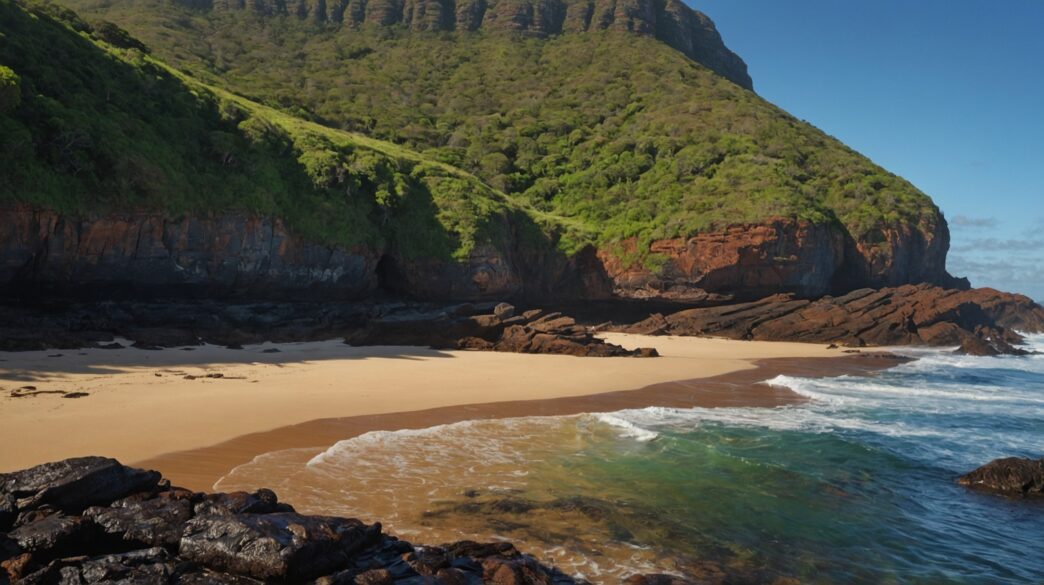
Coffee Bay – Famous for the Hole-in-the-Wall rock formation and stunning beaches.
Overview
History & Culture
There’s a story that goes (long ago) that coffee beans once washed ashore from a shipwreck. The area’s climate was so friendly that some of those beans took root and sprouted. Locals noticed this random patch of coffee plants, and the rest, they say, is history. That’s one version, anyway. Historically, we do know that coffee plants were cultivated here in the colonial period, but I like the romantic idea of beans drifting in from a faraway cargo ship, as if fate itself wanted this place named Coffee Bay.
Yet, Coffee Bay’s heart belongs to the Xhosa people. They’ve lived here for centuries, well before any notion of coffee or trade or shipwrecks. The stories, dances, and songs you’ll hear even today reflect a deep connection to the land. You might glimpse a beehive hut known as an indlu, or see local women dressed in traditional attire with beautifully beaded necklaces that tell generational stories. It’s the kind of living heritage that feels both fragile and timeless.
Population
With only about 1,000 residents, Coffee Bay remains a tight-knit village where folks greet each other by name. You’ll see children playfully chasing goats on the roadside and friends gathering for impromptu braais (barbecues). Life moves at a relaxed pace, so if you’re used to big-city hustle, it might feel like you’ve stepped into another dimension. The sense of community is incredibly strong, though. When you spend a few days here, people start recognizing you, waving hello, and even inviting you over for tea to chat about your day. That’s the beauty of smaller places like this.

Key Attractions
Alright, so you’ve seen the star of the show, but what else is there? Turns out, Coffee Bay is brimming with hidden corners and lesser-known gems:
Coffee Bay Beach
A gentle stretch of sand where you can dip your toes and enjoy a calmer shore than some of the rocky spots around. Grab a boogie board if you’re not quite ready for full-on surfing.
Biyela Viewpoint
A vantage point that gives a jaw-dropping panorama of the coastline. Believe me, your sunrise or sunset photos from here will make your friends ask, “Where on earth is that?”
Surfing Hotspots
The waves can be playful or downright challenging, depending on the day. Local surf instructors are usually around to give a lesson or two. Even if you’re not a surfer, it’s fun to watch others bravely tackle the breakers.
And let’s not forget the cultural side:
Local Craft Markets
These pop up in small pockets around the village. People sell handcrafted beadwork, carved wooden masks, and other treasures that reflect Xhosa artistry.
(A quick tip: Whenever you buy crafts from local artisans, you’re fueling the local economy and encouraging cultural preservation. And it’s always nice to hear the story behind each piece—like how a certain bead pattern might have originated from a historical clan symbol.)
Hidden Gems
I’ve found that the best travel memories often come from straying beyond the main tourist spots. Coffee Bay offers a buffet of hidden gems if you’re game for a bit of exploration.
1. Nature Spots
Pondo Village Trail
This scenic route weaves through traditional Xhosa villages. Sometimes, local children will run alongside you, giggling, just to see where you’re heading. You’ll pass by huts painted in vibrant colours, farmland dotted with cows, and, if you’re lucky, you’ll get invited into someone’s yard for a quick chat or a glass of homemade ginger beer.
Mafunda Beach
If you’re craving solitude, this quieter beach is your best bet. It’s perfect for those moments when you just want to sit and let the ocean’s rhythm soothe your worries.
Hole in the Wall Coastal Walk
Yes, the rock formation is the main event. But consider walking the 6-kilometer trail to get there. You’ll be rewarded with dramatic cliffs, hidden coves, and a sense of achievement once you finally spot that famous rock around the bend.
Black Rock Beach
A lesser-known cousin to Coffee Bay Beach. Dark sand, rugged cliffs, and fewer footprints in the sand. Perfect if you want that “I have the place to myself” vibe.
Biyela Viewpoint
So nice, I’m mentioning it twice! Since it’s occasionally overlooked by tourists, it can still feel like a secret, especially at sunrise.
(Pro tip: Bring a pair of decent hiking shoes. Those coastal paths can be slippery after the rain… and it does rain, sometimes out of nowhere!)
2. Cultural Experiences
Xhosa Cultural Tours
Imagine being welcomed into a traditional homestead, learning about local beliefs, hearing about the importance of ancestors, and maybe even trying your hand at making umphokoqo (a crumbly maize dish).
Coffee Bay Craft Market
This one’s small but mighty. I’ve had the sweetest conversations here, mostly about how each bead pattern often has a story. That’s one reason I always leave with more souvenirs than I planned.
Cultural Festivals
Keep your eyes and ears open for any local celebrations. They’re not always advertised online, but you might spot posters around town or hear word of mouth. Think lively music, colourfully dressed dancers, and tables laden with home-cooked food.
Local Art Galleries
Tiny, tucked-away spaces showcasing the work of local painters and sculptors. Don’t be shy—ask the artists about their inspiration. You might be surprised at how open and generous they are with their stories.
Traditional Music and Dance Performances
Sometimes these performances happen in communal halls or open fields. Drumming, singing, and dancing can go on late into the evening. If you feel the rhythm, join in!
3. Historical Sites

The Burial Site of Mpunzi
I visited with a local historian who explained how Mpunzi was a respected chief in the region. The site itself is simple yet powerful, a reminder of the deep respect the community holds for its leaders.
Coffee Bay Lighthouse
Built in the early 20th century, it feels like a time capsule. The caretaker told me how many storms it’s weathered over the decades, guiding ships through what can be treacherous waters. The panoramic views from here are stunning, so bring your camera.
Local Mission Schools
Some date back to the 19th century. Walking through the old classrooms felt like stepping into the pages of a history book: wooden desks, dusty chalkboards, and a sense of the determination it took to bring formal education to these remote coastal areas.
The Xhosa War Memorial
A small monument that quietly tells a big story. It honours those who fought during the colonial wars. Standing there, I couldn’t help but feel a mix of sadness and respect for the resilience of the Xhosa people.
Community-Run Historical Displays
A few guesthouses have mini “museums” in their lobbies, featuring old photographs, letters, and artifacts. They’re worth a peek. Sometimes, a local guide will drop by to share stories.
4. Food & Drink
The Coffee Shack
More than just good coffee; it’s a social hub. I once spent an entire afternoon here just chatting with travellers who’d been backpacking across Africa. Their stories were incredible, and the cappuccino wasn’t half bad either!
Madiba’s Kitchen
Tucked in a little side street, they serve umngqusho and other hearty Xhosa dishes. The owners are always up for a chat, so don’t be surprised if they come sit with you, sharing tales of how the recipes were passed down from their grandparents.
Nqaba’s Restaurant
Go for the seafood. Grilled fish, straight from the ocean, is a highlight. If you time it right, you can catch a sunset that turns the sky into shades of pink and orange, which pairs nicely with that fresh catch.
Sani’s Takeaway
Bunny chow or boerewors roll? Hard to choose. This spot’s cheap, cheerful, and perfect if you’re on the go.
Buntu’s Bar and Grill
A little noisy, a little lively, and a whole lot of fun. You’ll often find local musicians playing here on weekends. Great vibes and cold drinks—what more could you want?
Xhosa Cultural Food Experiences
Sometimes local families or community centres will hold cooking classes or open their kitchens to visitors. Learning to make isijingi (pumpkin porridge) or potjiekos in someone’s home is an experience that lingers long after your trip.
5. Unique Activities
Xhosa Cultural Workshops
You could learn to make your own beadwork bracelet or basket under the guidance of a local artisan. Trust me, it’s a meditative process and a lovely way to make new friends.
Guided Hiking Tours
Local guides know the land like it’s part of their soul. They’ll show you hidden waterfalls, special rock pools, and share legends that you won’t find in any guidebook.
Traditional Dance Classes
I once stumbled into a group practicing their moves near the beach. They waved me over, taught me some steps, and we ended up laughing until our stomachs hurt. It was a magical, spontaneous moment that reminded me how dance can break down any language barrier.
Surf Lessons
Coffee Bay’s waves can be forgiving enough for beginners on some days, yet challenging enough for more seasoned surfers on others. If you’ve ever wanted to try, this is your chance.
Whale Watching Tours
From June to November, you might see Southern Right whales migrating along the coast. Spotting a whale breach is nothing short of breathtaking.
Sunset Kayaking
Paddling along the coastline at dusk? It’s like sliding through liquid gold, especially if the sunset is fiery. Keep an eye out for dolphins; they sometimes join the fun.
Local Tips
1. Places to Stay

The Coffee Shack
A backpacker haven. Dorm beds, private rooms, communal meals, and group surf lessons make it super sociable.
Ocean View Hotel
Perfect if you fancy a bit more comfort. Rooms with a view, a lovely on-site restaurant, and a short stroll to the beach.
Coffee Bay Lodge
Cozy vibes, near the beach, and they can arrange activities like horseback riding or guided hikes.
Aloha Lodge
Small and personal, with home-cooked meals. You’ll almost feel like part of the family by the time you leave.
Dolphin View Guesthouse
Keep your binoculars handy because dolphins and, in season, whales can pop up. Warm hosts with a knack for local tips.
Haven on the Hill (Airbnb)
If you want a bit more privacy, book a private home with panoramic ocean views. Great for couples or families who want a “home away from home” experience.
(Heads up: Wi-Fi can be spotty, so if you’re a digital nomad, plan accordingly. But hey, maybe take it as a sign to unplug and soak up the natural beauty.)
2. How to Get Around
Local Taxis (Kombi Taxis)
Cheap, lively, and a chance to mingle with locals. Just know they don’t always run on strict schedules.
Bike Rentals
Pedal at your own pace, find hidden beaches, and stop whenever you like to snap a photo.
Walking Tours
The village is small enough for leisurely strolls. Plus, you never know what friendly face you might meet around the corner.
Car Rentals
Best for day trips to places like the Hole in the Wall if you want the freedom to linger. But watch out for those potholes; they’re real!
Local Guides and Tours
A sure way to discover off-the-beaten-path treasures. Guides are usually proud ambassadors of their home, so you’ll end up learning a lot more.
Motorbike Rentals
If you’re comfortable on two wheels, it’s quite an adventure on those winding roads. Just take it slow on wet days.
(Don’t forget: Always chat with your accommodation staff for the latest road conditions. They’re usually in the know about recent rain damage or ongoing repairs.)
3. Best Time to Visit
Most folks say May to September (the dry season) is golden:
- Mild Temperatures: Between 15°C (59°F) and 25°C (77°F), so you won’t be drenched in sweat.
- Less Rain: Perfect for hiking, beach days, and cultural events without worrying about sudden downpours.
- Whale Watching: Southern Right whales do their grand parade from June to November.
- Fewer Crowds: Even in peak times, Coffee Bay’s not overrun. But shoulder seasons are especially peaceful.
If you prefer a greener, lusher landscape and don’t mind occasional rain, November to March can be lovely too. Just pack a light rain jacket.
Adventure Seekers
1. Road Trips and Routes
Port St. Johns
About 80 km. The highlight is stopping in Mthatha for the Nelson Mandela Museum. Port St. Johns’ Second Beach is a dreamy little spot, though watch for riptides.
Hluleka Nature Reserve
Roughly 48 km. Less touristy, more wild. The reserve has thick coastal forest, making it a birdwatcher’s paradise.
Qumbu
Around 60 km, offering a peek into small-town life and local history via the Qumbu Museum.
Mthatha
About 60 km. Check out Mvezo Village, Nelson Mandela’s birthplace. The sense of history there is palpable.
Wild Coast
Endless possibilities. Stop by remote villages like Ngqeleni, chat with locals, and see how daily life unfolds in more hidden corners of the Eastern Cape.
(Safety Note: The roads can be narrow and not always well-maintained. Drive during daylight if possible and keep an eye out for livestock wandering across the road.)
2. Nature & Wildlife Escapes

Hluleka Nature Reserve
If you crave quiet beaches and lush forest trails, this is your sanctuary. I once spent an afternoon birdwatching here and spotted over a dozen species I’d never seen before.
Mbashe River Nature Reserve
Tucked away but worth it for the waterfalls and serene river views. It’s a good place for a refreshing swim in natural pools.
Silaka Nature Reserve (near Port St. Johns)
Coastal cliffs, forest paths, and a chance to see the occasional blue duiker (a tiny antelope).
Qora River Mouth
Perfect for kayaking or fishing in the estuary. Local fisherman might share a tip or two if you strike up a conversation.
Pondo Community Conservation Areas
Managed by local communities, offering guided nature walks that blend environmental education with cultural insights.
Wild Coast Sun Nature Reserve
A bit more commercial due to the resort, but the surrounding nature remains pristine. Good for short hikes or scenic drives.
3. Adventure Activities
Rock Climbing at Hole in the Wall
Yep, that landmark doubles as a climbing site. You’ll get a totally new perspective on that famous arch.
Zip-lining in the Wild Coast
Some operators offer zip lines through the forest canopy. You’ll feel like a bird for a few thrilling seconds.
Off-Grid Camping at Mdumbi Beach
Swap electricity for starry skies and ocean lullabies. Mdumbi’s also known for some truly epic waves.
Mountain Biking
Explore hills, coastal paths, and rural trails where you might need to yield to passing goats.
Kayaking the Mdumbi River
There’s something so peaceful about gliding on calm waters, surrounded by lush greenery.
Hiking the Wild Coast Trail
Multi-day trek for those who want to push their limits and see the region’s absolute best scenery. You can go guided or self-guided, depending on your confidence level.
(Before you go all out, do a quick weather check. Storms can pop up, and you don’t wanna be zip-lining in a thunderstorm.)
4. Cultural & Heritage Tours
Xhosa Cultural Village Tours
Learn about ancestors, traditional healing, and daily life. It’s both enlightening and humbling.
Coffee Bay Craft Market
More than just a market: it’s a cultural meetup. You’ll often see artisans at work, weaving or beading right in front of you.
Historical Guided Walks
Some local historians offer walks that weave through old mission stations or small colonial ruins.
Traditional Music and Dance Workshops
An immersion in Xhosa rhythms. You might discover you have hidden dance talents!
Craft Workshops
Make your own souvenir instead of just buying one. Think pottery, beadwork, or weaving.
Coffee Bay Lighthouse
Learn the maritime history of this rugged coastline, where many ships have met their end.
(A quick aside: The community-run tours often reinvest proceeds into local schools and conservation efforts, so it’s a fantastic way to give back.)
5. Culinary Trails
Local Seafood Stalls
Grab crayfish or snoek fresh off the boat, grilled right before your eyes.
Xhosa Traditional Meals
Don’t leave without trying umngqusho or potjiekos. The flavours are hearty and comforting.
Coffee Bay Farm Stays
Some farms offer cooking classes using their homegrown produce. It’s a lesson in both sustainability and Xhosa traditions.
Hidden Food Markets
Occasionally pop up on weekends, featuring fresh produce, homemade jams, or artisanal cheeses.
Wine & Craft Beer Tasting
Small local producers might surprise you with fruit wines or interesting ales.
Community Cooking Classes
Often organized in homesteads. You’ll learn not just recipes but also the cultural significance behind them.
By now, I hope you’re feeling a connection to Coffee Bay, even if you haven’t visited yet. It’s a place that has it all: jaw-dropping scenery, a culture rich with music and dance, and a vibe that practically begs you to slow down and notice life’s smaller details. You’ll see the pride in the faces of the locals, hear the heartbeat of Xhosa traditions in every drumbeat, and feel the ocean breeze remind you that nature still holds plenty of wild secrets.
In a world where cookie-cutter hotels and selfie-obsessed crowds sometimes dominate travel, Coffee Bay is a refreshing reminder that genuine adventure still exists. There are real stories here—about family, resilience, laughter, and the ocean’s timeless dance. So, if you’re contemplating an escape from your comfort zone, maybe searching for a place that will both challenge and embrace you, I’d say trust your wanderlust and go. Pack a sense of curiosity, an open heart, and maybe some sturdy shoes for those muddy trails.
So what do you think? Are you ready to take that scenic drive and let the Wild Coast dazzle you? Next time someone mentions the Eastern Cape, or you see a glimmer of a postcard with the Hole in the Wall in a shop window, I hope your heart skips a beat in anticipation. Because Coffee Bay isn’t just a place on the map… it’s an invitation to experience something profound, something beautiful, and, most importantly, something real.
(Safe travels and happy exploring, my friend… I’ll see you on the shore!)


