


Cape Town – South Africa’s most popular tourist city, with landmarks like Table Mountain, Robben Island, and V&A Waterfront.
Overview
Location
Cape Town perches at the southwestern tip of South Africa, right where the Atlantic and Indian Oceans mingle (or “converge,” as the geography buffs like to say). It’s kind of like a cosmic handshake between two mighty bodies of water, which makes the climate interesting and the vistas downright dazzling. At the city’s heart is Table Mountain. It’s big, flat-topped, and an ever-present guardian of Cape Town. Locals joke that it has a mind of its own, sending down a “tablecloth” of clouds that can roll in seemingly out of nowhere. This mountainous embrace also extends to spots like Cape Point and the Cape of Good Hope, both offering dramatic cliffs, cheeky baboons, and the sense that you’ve reached the edge of the Earth.
History
Cape Town’s story is a tapestry woven with threads of indigenous Khoisan heritage, Dutch and British colonial rule, and the long, painful era of apartheid. Founded in 1652 by the Dutch East India Company as a refreshment station (imagine a giant oceanic rest stop for trading ships), the city quickly became pivotal for international trade routes. But that colonial role came with centuries of oppression and exploitation, the scars of which are still felt today.
Take Robben Island, for example. It’s just off the coast, but it looms large in South African history. Nelson Mandela spent many of his 27 years of imprisonment there, along with other political prisoners who fought tirelessly to end apartheid. Visiting the island now, you’ll hear former inmates share stories about perseverance and hope, a reminder that we should value our freedoms. If you ever want to see living history in action, Robben Island is your go-to.
Population
Cape Town is home to over 4.7 million souls—and that number keeps rising. People from different racial, ethnic, and cultural backgrounds all claim a piece of the city as their own. You’ll hear multiple languages—English, Afrikaans, Xhosa—on any given street, sometimes blended in the same sentence. It’s that swirl of languages that can make daily life here feel like a bright mosaic of sounds. According to a 2019 report from the South African Cultural Diversity Institute, Cape Town ranks among the country’s most linguistically diverse cities, which you’ll quickly notice the moment you land.
The city’s uneven socio-economic fabric can be startling. Multi-million-dollar mansions perch on hillsides, while a short drive away, communities in informal settlements face every day struggles around basic amenities. But Cape Town also has a unique spirit of resilience. Neighbourhoods like Langa and Khayelitsha have blossoming creative scenes, fuelled by local entrepreneurs and artists who are proud to share their cultural heritage.
Key Attractions
I’m guessing you might have heard of at least three major Cape Town landmarks: Table Mountain, Robben Island, and the Victoria & Alfred (V&A) Waterfront. They’re iconic for a reason, so let’s give them some well-deserved love.
Table Mountain
Everyone raves about Table Mountain, but guess what? It’s worth every bit of fuss. If you’re up for it, hiking up Platteklip Gorge is a heart-pumping challenge. Or, you can take the cable car for a breezy (yet still somewhat nerve-jangling) ride to the top. Once there, you’ll be greeted by a panoramic view that’s basically Cape Town’s version of a red-carpet introduction. On a clear day, you can see Robben Island off in the distance, the shimmering Atlantic coastline, and sometimes, if you’re really lucky, a few dassies (rock hyraxes) scurrying around. They look like oversized guinea pigs but are curiously related to elephants (DNA is wild, isn’t it?).
Robben Island
A UNESCO World Heritage Site, Robben Island isn’t just a place you tick off your “must-visit” list. It’s a deeply moving experience. You’ll walk through prison cells that held some of South Africa’s greatest freedom fighters. Former political prisoners often guide the tours, recounting how they transformed a place designed to break spirits into a crucible for leadership and unity. I’ve been there twice, and both times, I left with a renewed sense of humility and respect.
V&A Waterfront
Think of the V&A Waterfront as Cape Town’s social and cultural playground. It’s got an aquarium, a giant Ferris wheel called the Cape Wheel, high-end boutiques, plus tons of restaurants and street performers to keep you entertained. One late afternoon, I stumbled upon an impromptu jazz performance by a local group who’d set up right outside the Watershed (a big arts and crafts market). Suddenly, a small crowd was dancing along, and I felt like I was in the middle of some joyful musical movie scene. That’s the Waterfront for you—moments of pure spontaneity against a backdrop of maritime history.
More Classic Spots
There’s also Kirstenbosch National Botanical Garden (perfect for a Sunday picnic), Cape Point (where you can watch waves crash against dramatic cliffs), and the Cape Winelands (hello, grape paradise!). You might’ve seen them featured in glossy travel magazines or Instagram hashtags like #CapeTownBucketList, but seeing them in person is something else entirely. In the next sections, though, we’ll dive deeper into lesser-known wonders that might just steal your heart.
Hidden Gems
If you’ve got a flair for exploration and love stumbling upon places most travelers miss, Cape Town’s your oyster. Let’s crack it open.
1. Nature Spots
Beta Beach
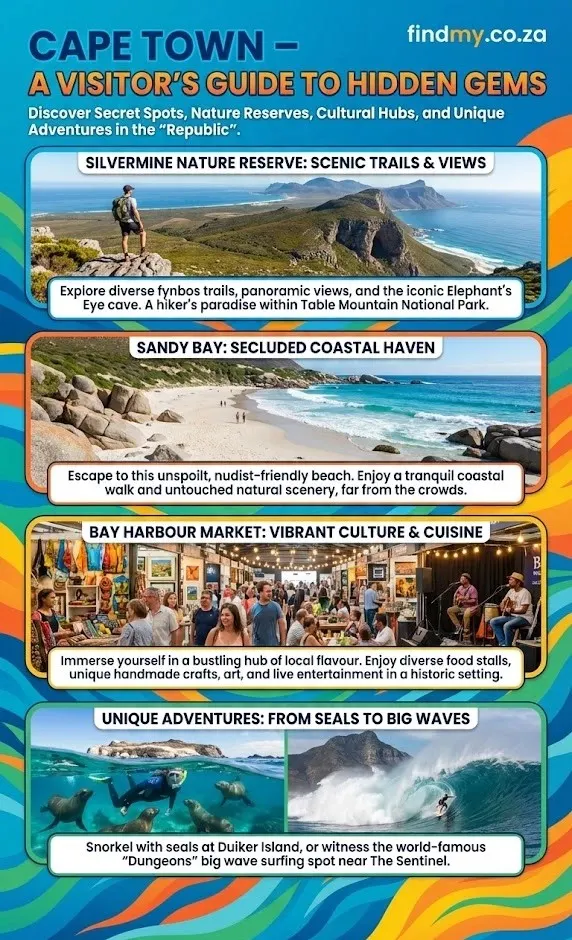
Tucked away near Bakoven (close to Camps Bay), Beta Beach is that secret you hear whispered among locals. Picture soft sand, a perfect view of Lion’s Head, and calmer waters for a soothing dip. Whenever I need a quick “reset,” I head here with a beach towel and a paperback. The vibe is so peaceful you’ll forget the crowded city beaches even exist.
Cecilia Forest
If fairy tales were set in Africa, I’m convinced they’d include Cecilia Forest. Located on Table Mountain’s eastern slopes, its trails wind through tall trees and fynbos (which is a fancy term for the region’s unique shrubland). You might see locals out for a run or families collecting fallen pinecones. There’s a magical hush here that feels like stepping into another realm. Just watch for slippery trails if it’s rained recently…trust me on that one.
Silvermine Nature Reserve
Part of Table Mountain National Park, Silvermine is where I once had a spontaneous afternoon picnic with new friends I’d met on a hiking forum. We lugged in a basket of local cheeses and wine, found a spot near the reservoir, and spent hours swapping travel tales. The reserve’s lesser-known trails also offer spectacular viewpoints over False Bay. If you’re into birdwatching, bring binoculars—the variety of feathered friends is impressive.
Scarborough Beach
If you’re longing for rugged natural beauty far from city chaos, Scarborough Beach awaits. Locals often describe it as “windy but wonderful.” Yes, the wind might try to steal your hat, but the solitude and wild vibe more than make up for it. If you’re feeling brave, you can surf the waves. Otherwise, a simple shoreline stroll with the ocean crashing at your feet is just as rewarding.
Kogelberg Nature Reserve
A bit of a drive from Cape Town, Kogelberg is a UNESCO Biosphere Reserve that doesn’t see the same crowds as some other parks. Think unspoiled fynbos, mountain vistas, and the kind of quiet that makes you realise how much you needed a digital detox. I went there once in early spring and discovered entire hillsides covered in vibrant wildflowers. It felt like nature had thrown a confetti party just for me.
Newlands Forest
Close to the city but still offering a peaceful, tree-lined escape, Newlands Forest is where you go if you only have an hour or two but crave nature. It’s popular for dog walks, family outings, and sometimes trail running. You’ll find old ruins of historic buildings and a few unexpected glimpses of city views through breaks in the foliage.
Noordhoek Beach
Yes, Noordhoek is known among locals, but it’s still surprisingly quiet compared to hotspots like Clifton or Camps Bay. This stretch of white sand goes on and on, perfect for horseback rides at sunset or long contemplative walks. Chapman’s Peak Drive nearby is one of the world’s most scenic routes (trust me, you won’t be able to stop snapping photos).
2. Cultural Experiences
Neighbourgoods Market at The Old Biscuit Mill
Every Saturday, the Old Biscuit Mill in Woodstock transforms into a bustling carnival of artisanal foods, handmade crafts, and live music. It’s like a condensed version of Cape Town’s creative energy. Grab a gourmet burger, a craft beer, and a seat at one of the communal tables. Next thing you know, you’re chatting with locals about best hiking spots or the current state of local politics. It’s that kind of friendly vibe.
Kalk Bay Modern Art Gallery
Kalk Bay’s bohemian charm extends to this modern art gallery. If you wander inside, you’ll find contemporary South African pieces—ceramics, textiles, and other media. On a recent visit, I stumbled upon a series by a young artist from the University of the Western Cape, exploring the concept of home through stark black-and-white ceramics. That’s something you won’t easily find in larger, more commercial galleries.
Langa Township Tours and Craft Centre
Langa is Cape Town’s oldest township, rich with history, art, and a sense of community resilience. Several locally run tour groups (like Ilitha Cultural Tours) offer walking tours that include visits to the Langa Cultural Centre, artisan workshops, and street art tours. The highlight for me was meeting a local crafter who made intricate beadwork representing his life stories. It reminded me that behind Cape Town’s polished tourist veneer, there’s a world of vibrant local culture well worth exploring.
Bree Street First Thursdays
On the first Thursday of each month, Cape Town’s central streets—especially Bree Street—transform into an open-air gallery. Shops, galleries, and restaurants stay open late, hosting art exhibitions and pop-up events. There’s music in the air, laughter drifting from rooftop bars, and the feeling that the entire city is out for a celebratory stroll. If you love discovering small galleries and hidden artist studios, this is your night.
Hout Bay Market
Hout Bay Market might not be completely off the radar, but it often gets overshadowed by bigger events in the city. Nestled near the harbour, this weekend market offers local crafts, clothing, and a laid-back atmosphere. Grab a sweet pancake from a stall, sip on freshly squeezed juice, and enjoy the sea breeze. And if you’re lucky, you’ll see curious seals popping their heads out of the water, hoping for a spare fish or two.
Iziko Bo-Kaap Museum and Local Cooking Classes
Strolling through Bo-Kaap is a feast for the eyes—colourful houses line the streets like a painter’s rainbow. But there’s more here than Instagram-worthy facades. The Iziko Bo-Kaap Museum provides insights into Cape Town’s Muslim community, explaining how cultural traditions have shaped this iconic neighbourhood. If you have time, sign up for a Cape Malay cooking class. Learning to roll samosas with a local “auntie” is not only delicious but a wonderful cultural exchange.
Cape Town International Jazz Festival Fringe Events
The main festival is well-known, but it’s those smaller performances leading up to the big days that really give you a personal taste of the city’s jazz scene. Imagine a dimly lit bar in Observatory, where a saxophonist pours his heart into a tune while an enraptured audience nods in agreement. These fringe events are intimate, raw, and often highlight up-and-coming musicians you won’t hear anywhere else.
Zeitz MOCAA Free Entry Days
Zeitz Museum of Contemporary Art Africa in the V&A Waterfront is an architectural marvel packed with cutting-edge African art. What many people don’t know is that Wednesdays (or certain special days) often have free or discounted entry, making the experience way more accessible. When I visited during a free-admission afternoon, I could leisurely wander through each exhibit without rushing. It was an eye-opening journey through the creativity and complexities of the African continent.
3. Historical Sites

The Slave Lodge
Right in the busy city centre, The Slave Lodge stands as a quiet but powerful memorial to Cape Town’s painful history of slavery. Dating back to the 17th century, it once housed enslaved people working for the Dutch East India Company. Now, it’s a museum offering exhibitions on human rights, colonial expansion, and the stories of those who once lived there. It’s a sobering but necessary stop if you want to fully understand Cape Town’s past.
The Castle of Good Hope’s Hidden Corners
Lots of visitors do the standard castle tour, but few venture into the lesser-known rooms where you’ll find niche exhibits about the Cape’s military history. Once, I came across a small display of artifacts from the 18th century—a battered trunk, old uniforms, and letters from soldiers describing the early settlement days. It gave me chills thinking about how many footsteps had echoed in those stone corridors.
District Six Museum’s Side Exhibits
The District Six Museum is fairly well-known, but it’s easy to skip the side exhibits that delve deeper into personal stories. Many of these revolve around letters, family photographs, and oral histories that capture the spirit of a once-thriving community forcibly removed under apartheid. If you’ve got time, chat with the curators. They’ll fill in details that might not be on the plaques, turning a museum visit into a heartfelt conversation.
Wynberg Military Camp and the Cape Corps Memorial
Tucked away in Wynberg, this military camp is home to a memorial for the Cape Corps, a unit made up of Coloured soldiers who served in the World Wars. Their contributions are often overlooked in mainstream history. Learning about their stories through old documents and local historians gave me a new perspective on how many diverse communities were pulled into global conflicts.
Koopmans-de Wet House
You might walk right past this unassuming building in central Cape Town, but it’s actually one of the city’s oldest houses. Inside, you’ll find a careful arrangement of 18th- and 19th-century Cape Dutch furniture and art. It’s like a time capsule showing how wealthy families lived centuries ago. My personal highlight was an old wooden cradle, lovingly restored, that once rocked babies who grew up in a very different Cape Town.
Josephine Mill
A working watermill in Newlands dating back to 1840? Sign me up. Josephine Mill gives you a glimpse into Cape Town’s agricultural past. When I visited, there was a guided tour showing how grains are ground into flour using water power. Afterward, we sampled freshly baked bread—warm, crusty, and basically irresistible. It’s a low-key experience but one that really connects you to the simpler rhythms of life.
Simon’s Town Heritage Museum
Simon’s Town is known for Boulders Beach and its penguins, but there’s more to discover if you venture into its small heritage museum. Housed in what used to be a mosque, it explores the region’s multi-layered past, including naval influences and the forced removal of people during apartheid. It feels intimate, almost like rummaging through a family attic filled with stories.
Rhodes Memorial and the Forgotten Hike
Rhodes Memorial itself is a decent lookout point, but fewer people tackle the hiking trail behind it. This path takes you through forested areas up toward the King’s Blockhouse, a military outpost from the 18th century. There’s something eerie and awe-inspiring about stumbling upon old fortifications tucked away in the dense foliage. It’s not the most famous hike, but it’s a chance to discover a piece of Cape Town’s layered past on foot.
4. Food & Drink
FindMy Food Recommendations:
The Raptor Room
On Roeland Street, you’ll find this cheerful little eatery painted in bright hues and decked out with quirky dinosaur-inspired decor. They serve comfort food with a local spin, from Cape Malay curries to decadent fried chicken waffles. I once tried their vegan bunny chow (a hollowed-out loaf of bread filled with curry) and couldn’t believe how satisfying it was. It’s a small space, so come early if you want a seat.
The Pot Luck Club Sunday Brunch
Situated in the Old Biscuit Mill, The Pot Luck Club is popular for dinner. But if you’re up for something different, their Sunday brunch is a real treat. They serve small plates designed to be shared, which means you’ll get to sample lots of flavours—Asian-inspired, South African-infused, and just plain global deliciousness. I recommend going with a group and ordering one of everything.
Biesmiellah Restaurant
In the colourful Bo-Kaap district, Biesmiellah is where you go for authentic Cape Malay cuisine. It’s family-run, and the recipes have been passed down through generations. The menu includes denningvleis (a tangy lamb stew) and a fantastic bobotie (curried mince dish topped with an eggy custard). Don’t be surprised if a local grandma stops by your table to see if you’re enjoying your meal. This place feels like a warm hug in food form.
Harvest Café & Deli (Muizenberg)
If you’re down in Muizenberg (the surfer’s paradise), check out Harvest Café & Deli. It’s not only a spot for killer smoothie bowls and fresh juices, but the view of the coastline is mesmerising. Grab a seat, watch surfers ride the waves, and let the sea breeze remind you that you’re on holiday—even if you technically aren’t.
Hidden Garden at The Stack
The Stack in Gardens is a brasserie set in a historic building. Many folks know about the main restaurant, but fewer venture into the charming hidden garden area out back. Picture a leafy courtyard, string lights overhead, and a sense that you’ve discovered a secret. Order something French-inspired—like their duck confit—and just soak in the relaxed vibes.
Jarryds Espresso Bar & Eatery (Sea Point)
Locals love Jarryds for breakfast and brunch, but many tourists don’t realize it’s there. Expect top-notch coffee, fluffy pancakes, and creative twists on classics (their eggs Benedict sometimes comes with a punchy hollandaise sauce that’ll wake you right up). It’s small, so you might have to wait for a table on weekend mornings, but it’s worth it.
Maria’s Greek Café
Tucked away in Dunkley Square, Maria’s Greek Cafe has a cozy, family-run feel that makes you want to linger over your meal. Their souvlaki and mezze platters are authentic and delicious. One Sunday afternoon, I ended up there with a group of friends, all of us sampling different dishes and passing plates around the table. We left full, happy, and convinced that Greek cuisine might just solve world peace if given the chance.
The Gin Bar
Behind the Honest Chocolate Café in the city centre is a somewhat secret door leading to The Gin Bar. It’s tiny, intimate, and perfect for connoisseurs (or curious newbies). You’ll find a curated list of local gins infused with local botanicals like rooibos and fynbos. Try a tasting flight if you want to broaden your gin horizons. The bartenders love chatting about their craft, so don’t be shy—ask questions!
Wagon Trail Brewery at Anura Vineyards
Wine might dominate the Cape region, but craft beer enthusiasts can find solace at Wagon Trail Brewery, tucked away at Anura Vineyards in Stellenbosch. The orchard setting is serene, the beer flight is varied, and there’s a farm-style restaurant that pairs your pint with hearty comfort food. It’s a nice twist on the usual vineyard-hopping routine.
Eastern Food Bazaar
Wedged between the city centre and District Six, Eastern Food Bazaar is a gastronomic labyrinth of Indian, Middle Eastern, and African cuisine. Imagine aromatic curries, tandoori roti, shawarmas, and more, all at wallet-friendly prices. It’s a cafeteria-style setup where you order from different stalls. The chaotic energy here is half the fun—an absolute must if you want a taste of Cape Town’s multicultural spirit.
Explore Cape Town’s best budget-friendly restaurants.
5. Unique Activities
Uthando South Africa Cultural and Community Tours
Uthando (meaning “love” in Xhosa) organises tours into townships and community projects that aim to uplift locals through dance, art, and education. You’ll meet people making a tangible difference. I tagged along on a gardening project tour and ended up planting seedlings with a group of schoolkids. Their excitement was contagious, and it reminded me how small acts can grow into something beautiful for an entire community.
Gin Making Workshops at New Harbour Distillery
If sipping gin at The Gin Bar piqued your interest, head to New Harbour Distillery in Woodstock for a hands-on workshop. You’ll choose botanicals—like citrus peels or African herbs—and distil your own unique blend. I still have a half-finished bottle from my visit, and every time I look at it, I smile at the memory of playing alchemist for a day.
Silver Jewellery-Making Workshops at The Jewellery Studio
In creative Woodstock, The Jewellery Studio hosts small workshops where you learn to design and forge your own silver pieces. It’s a tactile, meditative process—hammering, shaping, polishing—that leaves you with a sense of accomplishment (and a shiny souvenir!). If you’re traveling with a partner or friend, you can even make matching rings or pendants.
Kayak Wine Tours in the Winelands
Yes, you read that right: kayak wine tours. Paddle gently along the Eerste River in Stellenbosch, stopping at boutique wineries for tastings. It’s an unusual mash-up of adventure and indulgence. You’ll work off some calories paddling, then promptly replace them with delicious local wine. Talk about a balanced lifestyle!
Surfing and Yoga Retreats in Muizenberg
Muizenberg’s warm waters and forgiving waves make it ideal for beginner surfers. Some places offer surf-and-yoga retreats, combining morning yoga sessions with afternoon surf lessons. It’s all about finding your flow—both on the mat and on the board. Plus, you’ll meet fellow travellers in search of that sweet spot between adrenaline and tranquillity.
Pottery Classes at Clay Café
In Hout Bay, the Clay Café invites you to unwind and get creative with clay. You can paint, glaze, or even shape your own pottery. Imagine spending a lazy afternoon shaping a bowl while sipping tea. That’s basically therapy in art form. And if your travel buddy has zero artistic skills, don’t worry—the staff is super friendly and guides you through every step.
Cooking Classes with Cape Malay Families
Bo-Kaap continues to enchant with these in-home cooking classes. You’ll learn the secrets of Cape Malay spicing—think cardamom, turmeric, chilli, and cinnamon swirling together. My personal triumph was mastering samosas (though they looked a bit lopsided at first). By the end, we all sat around a big table, feasting on our creations and trading stories about family traditions. It felt like being part of the neighbourhood, even if just for a day.
Ghost Tours of Historic Cape Town
If you’re a thrill-seeker, you can find nighttime tours that delve into Cape Town’s haunted history. We’re talking old colonial mansions, deserted hospitals, and even the Castle of Good Hope after dark. You might roll your eyes, but once you’re in a dimly lit courtyard listening to eerie tales about restless spirits, those goosebumps get real.
Hands-on Beekeeping Experiences at Honeywood Farm
Out in the Overberg region lies Honeywood Farm, where you can don a beekeeper suit and learn about these tiny pollinators. It’s a surprisingly zen experience—and a little nerve-wracking if you’re new to bees. But you’ll gain a huge appreciation for how crucial they are to our food systems. You might even get to taste fresh honey straight from the comb, which is a sweet revelation.
Bicycle Art Tours in Woodstock
Woodstock’s walls are covered in murals, graffiti, and street art celebrating everything from social activism to local folklore. Bicycle tours let you explore at a relaxed pace, chatting with a local guide who can point out who painted what and why. It’s a vibrant crash course in Cape Town’s contemporary art movement, plus a fun way to burn off those pastry calories you’ve been collecting along the way.
4. Local Tips
Places to Stay
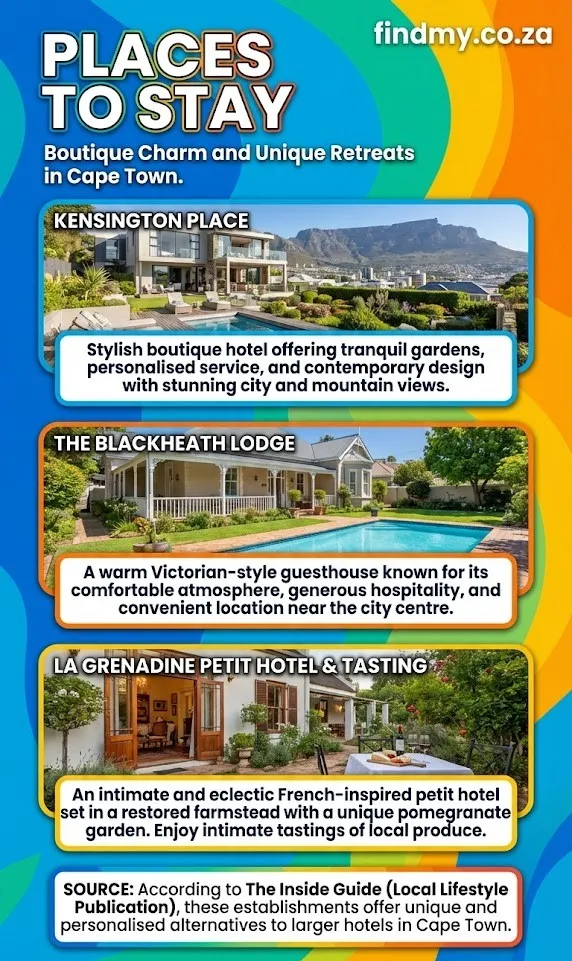
Kensington Place
Nestled in the leafy suburb of Higgovale, Kensington Place is a boutique hotel that gives off private-villa energy. The staff greets you by name, and the rooms offer gorgeous views of Table Mountain or the city lights. If you’re seeking quiet luxury with a personal touch, this is your place.
The Blackheath Lodge
Over in Sea Point, The Blackheath Lodge merges Victorian architecture with modern comforts. I recall stumbling into their cozy reading nook on a rainy afternoon and losing track of time. They serve a delightful breakfast spread—think fresh croissants and seasonal fruits from local farms—so you can start your day with a satisfied smile.
La Grenadine Petit Hotel
Tucked into a 19th-century farmhouse in Tamboerskloof, La Grenadine exudes a certain French countryside charm. It’s got a courtyard alive with fruit trees and flowers, and you’ll be steps away from Cape Town’s vibrant restaurant scene. If you’re a fan of boutique hotels that feel more like homestays, you’ll love it.
Jardin d’Ébène Boutique Guesthouse
Afro-chic meets urban oasis in Tamboerskloof. With just five rooms, Jardin d’Ébène stays intimate. Imagine diving into a plush sofa after a hike, sipping on local wine, and flipping through a coffee table book about African art. That’s the vibe here—homey yet refined.
The Cape Cadogan Boutique Hotel
Housed in a Georgian and Victorian building in the Gardens area, The Cape Cadogan blends historical architecture with modern flair. Each room tells a slightly different story, with antique touches and contemporary splashes of colour. Plus, you’re within strolling distance of Long Street’s buzzing nightlife if you’re in the mood for a night out.
Villa Cape Adventures (Airbnb)
If you’d rather feel like a resident than a hotel guest, consider renting this stylish townhouse in De Waterkant. It boasts bright pops of decor, a rooftop terrace for sundowners, and quick access to the city’s coolest spots. I once spent a weekend here with friends, and we loved being able to come and go at our own pace.
Welgelegen Boutique Hotel
With only 13 rooms split across two Victorian-era homes in Gardens, Welgelegen is the epitome of a tranquil retreat. Expect a courtyard garden, a petite swimming pool, and an inviting lounge area for lazy evenings. Kloof Street’s restaurants are nearby, perfect for a quick dinner outing.
The Cellars-Hohenort Hotel
In the Constantia Valley, The Cellars-Hohenort offers the best of both worlds: you’re close to Cape Town, yet it feels like you’re in the peaceful countryside. Surrounded by award-winning gardens, you can sip tea on a terrace overlooking vines and rolling lawns. Every corner seems designed for relaxation, from the spa to the fine-dining restaurant.
Abbey Manor Luxury Guesthouse
Perched on the slopes of Table Mountain, Abbey Manor delivers sweeping city views. The rooms retain a hint of Victorian grandiosity—think high ceilings and ornate details—but also have modern amenities. Snuggle under a warm blanket in the lounge on a cooler evening, sipping rooibos tea as you watch the city lights twinkle.
The Charles Café & Rooms
Right in the middle of De Waterkant, The Charles offers a charming set of rooms plus an on-site café that whips up great breakfasts. The vibe is cozy and artsy, and some rooms even come with their own terraces overlooking the colourful neighbourhood below. It’s perfect if you want a community feel without sacrificing style.
2. How to Get Around
MyCiti Bus Routes to Offbeat Areas
Cape Town’s MyCiti buses are handy if you prefer public transport. You can ride to more secluded beaches like Big Bay or Melkbosstrand on Route 108. It’s a lot cheaper than renting a car, and you get to see everyday life unfolding outside your window.
The Southern Line Train – Muizenberg to Simon’s Town
A scenic train route along False Bay’s coastline is something I didn’t realise I needed until I tried it. The train chugs past little fishing villages, surfers tackling waves, and the occasional group of penguins near Simon’s Town. It’s slow, sure, but it’s also ridiculously scenic. Bring a camera—and maybe a snack for the journey.
Bicycle Rentals in Sea Point
Rent a bike and pedal along the Sea Point Promenade. The path is flat, lined with sculptures, playgrounds, and ocean views. On a sunny day, you’ll pass joggers, dog walkers, and families out for a stroll. There’s something liberating about cruising by with the wind in your hair and a sense that you’re part of the local daily rhythm.
Electric Scooters from Ride-E Electric
If you spot folks zipping around on electric scooters near Green Point or the Waterfront, that’s likely Ride-E. They’re an eco-friendly way to explore short distances. I once used one to hop between coffee shops in Sea Point, fully embracing the city’s caffeine scene while feeling a tiny bit like I was starring in a futuristic travel commercial.
Ubers to Off-the-Beaten-Path Neighborhoods
Uber is widely available in Cape Town, which is great if you want to venture into less touristy spots like Observatory or Woodstock. No worries about parking, and you can chat up your driver, who might reveal a hidden gem or two. Just keep an eye on surge pricing during peak hours.
Local Shuttle Services to Wine Farms
If you’re planning on wine tasting (or “wine adventuring,” as a friend calls it), consider using a shuttle service like Vine Hopper. They run hop-on, hop-off circuits around Stellenbosch, so you can focus on sipping without fretting about driving. Some routes even take you to smaller estates you won’t find on typical tours, which is always a bonus.
Renting a Tuk-Tuk in Camps Bay
Picture a bright, breezy tuk-tuk ferrying you along the coast. It’s a fun, budget-friendly way to see Camps Bay and Clifton. Plus, it’s easier to park than a regular car (trust me, parking can be a headache in peak season). Just hold onto your hat if the driver takes a corner too fast—it adds a bit of thrill to the journey.
Go Nowhere Slowly – Slow Drive Tours in Classic Cars
Companies like Go Nowhere Slowly rent out vintage cars for scenic drives. Maybe it’s a convertible from the 70s or a classic Beetle from the 60s. Cruise down Chapman’s Peak with the top down, and you might feel like you’ve stepped into a retro postcard. Perfect for capturing those “wish you were here” moments on social media.
Cape Comoot Shared Shuttle Service
Cape Comoot is a shared shuttle that connects Cape Town to popular spots like the Cape Winelands, Hout Bay, or Cape Point. If you’re on a budget or just want to meet fellow travellers, this is a solid option. The rides are usually chatty affairs, with folks swapping tips on the best local breweries or hidden viewpoints.
Private Tours with Local Guides (Like AWOL Tours)
For a personalised spin, book a private tour focusing on cycling, hiking, or specialised interests. Local guides from AWOL Tours often know offbeat trails, secret beach coves, or secluded picnic spots. It’s a fantastic way to see the city from a passionate resident’s perspective, especially if you’re short on time but big on curiosity.
3. Best Time to Visit
Cape Town is a year-round destination, though each season brings its own charm:
- Summer (December to February): Warm, sunny, and ideal for beaches and outdoor concerts. Be ready for crowds and higher prices, especially around the festive season. Also keep your eye on local events—there are usually fun markets or music gigs popping up.
- Winter (June to August): Expect mild temperatures, occasional rain, and fewer tourists. Accommodations might be cheaper, and the surrounding landscapes become lush. If you’re into whale watching, this is prime time to spot southern right whales along the coast.
- Shoulder Seasons (September to November & March to May): You’ll enjoy moderate weather, fewer crowds, and potentially lower hotel rates. Wildflowers are in bloom from around August to early October—a vibrant spectacle. In late spring, the city often hosts cultural festivals highlighting art, jazz, and film.
5. Adventure Seekers
You’ve seen the beaches and soaked up the city. Now let’s talk about the thrill of the open road, the majesty of wildlife, and all those high-adrenaline activities Cape Town has hidden in its back pocket.
1. Road Trips and Routes
Cape Peninsula Loop
Start in Cape Town, drive to Hout Bay, follow the mesmerising Chapman’s Peak Drive, then meander to Simon’s Town and Kalk Bay before looping back. Stop at Hout Bay Market on the weekend for local crafts. Snap a hundred photos along Chapman’s Peak, especially if you catch the sunset. In Simon’s Town, say hi to the penguins at Boulders Beach. Then wrap up the day with fresh seafood in Kalk Bay.
Ceres Valley Route
Journey from Ceres to Tulbagh through fruit-laden valleys. In Ceres, you can pick your own fruit or hop on the scenic railway (check local schedules at Ceres Railway Heritage). Tulbagh is known for boutique wineries like Saronsberg, often overshadowed by bigger wine areas. Fewer crowds, bigger personal discoveries—that’s how I like it.
The Overberg Route
Begin in Hermanus (whale-watching central), then drive to Greyton via Bot River. Stop at a craft brewery in Bot River to sample local hops. Greyton’s Saturday market is a slice of country life—fresh breads, cheeses, jam, and good conversation. It’s like stepping into an old-fashioned storybook town.
West Coast National Park Route
Take the N7 north to Langebaan, passing through Melkbosstrand and Yzerfontein. Both have secluded beaches and small cafés. In spring, West Coast National Park bursts into a riot of wildflowers. You’ll find yourself saying, “Wow…” every two seconds. Don’t forget to pack a picnic; the park’s dedicated picnic sites have some of the best coastal views around.
The Winelands Route (Stellenbosch to Franschhoek)
Yes, it’s touristy, but if you pick smaller vineyards, you’ll avoid crowds. In Stellenbosch, try a guided walking tour to appreciate Cape Dutch architecture. In Paarl, wander around the Paarl Mountain Nature Reserve. Then roll into Franschhoek for its charming market and a quick peek into the Huguenot Memorial Museum, which highlights the region’s French heritage.
The Swartland Route (Malmesbury to Riebeek Valley)
Vineyards, olive groves, and wide-open skies. Malmesbury’s farmers’ market is brimming with fresh produce. The Riebeek Valley (Riebeek Kasteel and Riebeek West) offers wine and olive tastings, plus quaint art galleries. I once discovered a homemade olive tapenade that turned me into an instant fan.
Ceres and Witzenberg Valley
Loop around the Witzenberg area for epic mountain backdrops. Pick fruit in Prince Alfred’s Hamlet, then grab lunch in Wolseley. This area is also known for lesser-known hiking trails—just ask the local tourism office for maps.
The Cape Floral Route (Cape Town to Grabouw)
Drive along the N2 to Grabouw in the Elgin Valley. Stop in Kleinmond for whale watching (June to December). In Elgin, the Elgin Railway Market is a beautifully restored apple warehouse with food stalls, crafts, and live music. Tuck into farm-fresh apples or sip on local cider while taking in the orchard views.
The Cederberg Route (Clanwilliam to Cederberg Mountains)
For raw, dramatic landscapes, head north to the Cederberg. Clanwilliam is famous for rooibos tea—visit a tea house to learn about the brewing process. Venture deeper for rock art sites left by the San people centuries ago. Camping under the Cederberg stars is like drifting in a cosmic ocean of twinkling lights.
The Cape Agulhas Route (Hermanus to Agulhas)
Wrap up your road trip with a route to Cape Agulhas, the southernmost tip of Africa. The Agulhas Lighthouse is a must-see, and you can literally stand where the Atlantic and Indian Oceans meet. Struisbaai’s main beach is pristine enough to make you forget all about your return flight.
2. Nature & Wildlife Escapes
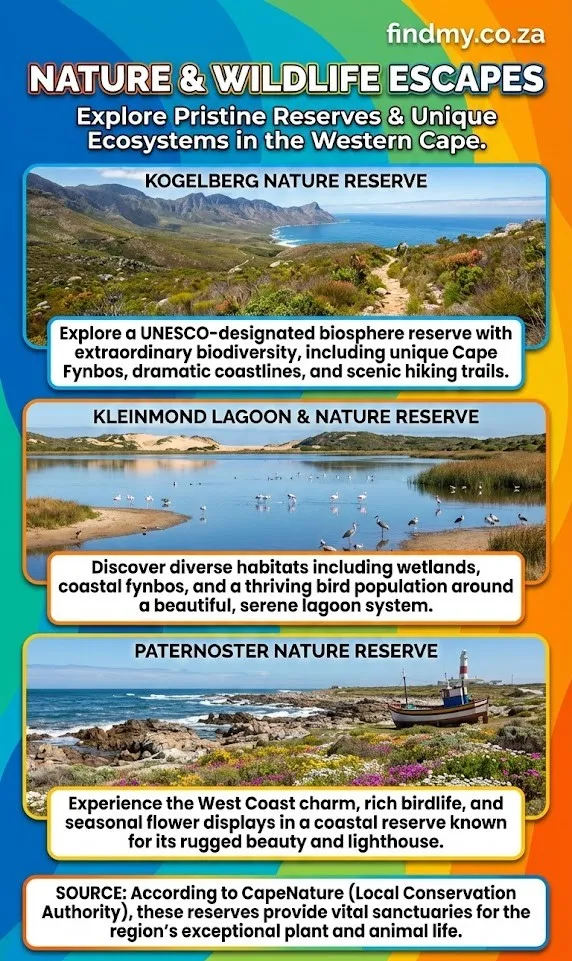
Kogelberg Nature Reserve
A UNESCO Biosphere Reserve known for its fynbos diversity. Trails like the Palmiet River walk are both serene and teeming with birds. Bring a camera—you might spot the elusive Cape sugarbird darting among proteas.
Kleinmond Lagoon and Nature Reserve
Lagoons, flamingos, and a peaceful vibe make this reserve a dream. Kleinmond’s also great for gentle hikes that reward you with ocean views, sometimes with dolphins surfing the waves in the distance.
Paternoster Nature Reserve
On the West Coast, Paternoster is often overshadowed by the more popular Langebaan. But if you want quiet beaches, vibrant flower season panoramas (around August/September), and a peek at local fishing culture, this is it.
Gansbaai and Dyer Island
Yes, Gansbaai is shark-cage-diving central, but it’s also a critical conservation area for African penguins on Dyer Island. Boat tours typically combine wildlife viewing with educational segments about marine ecosystems. You’ll never look at the sea quite the same way again.
Aquila Private Game Reserve
Only about two hours from Cape Town, Aquila is smaller than famous Kruger, but it offers a chance to see the Big Five in a more intimate setting. Day trips or overnight stays let you see lions, elephants, rhinos, and more. Waking up to the sound of African wildlife is an unforgettable experience.
Mokala National Park
Tucked near Kimberley, it’s a bit of a drive, but Mokala is worth it if you crave real solitude. Here, you might spot rare species like black rhino and tsessebe. And because it’s lesser-known, you’ll feel like the park is practically yours.
Bonnievale Nature Reserve
In the Winelands, but off the usual tourist track, Bonnievale offers birdwatching and scenic walks by the Breede River. Pair that with local wineries, and you’ve got a tranquil escape that’s easy on the soul.
Ceres Valley and Ceres Nature Reserve
This region transforms into a green wonderland in winter (June–August). Hikers can tackle moderate trails, and if you’re lucky, you might catch the tail-end of a rainbow over the valley after a passing rain shower.
De Hoop Nature Reserve
Coastal dunes, wetlands, and endless skies define De Hoop. From June to December, you can watch southern right whales breaching close to shore. Camping facilities and eco-friendly lodges let you stay immersed in nature’s symphony.
Hemel-en-Aarde Valley
It literally means “Heaven and Earth,” and once you see the rolling vineyards and mountains, you’ll understand why. Near Hermanus, this valley is home to cool-climate wineries and breezy hiking trails. It’s a blissful combination of refined wine culture and raw natural beauty.
3. Adventure Activities
Rock Climbing at Silvermine
Less crowded than the more famous climbing spots on Table Mountain, Silvermine has routes for both newbies and seasoned pros. Expect gorgeous granite walls and panoramic views that’ll take your breath away—quite literally if you’re clinging to a rock face.
Mountain Biking in Tokai Forest
Tokai is a local favorite for mountain bikers. Trails range from mild to wild. After recent reforestation efforts, the forest feels renewed. For a post-ride treat, there’s a nearby café serving cold craft beer (or a strong coffee if you need a pick-me-up).
Zip-Lining at Constantia Glen
Who would’ve thought you could zip-line over vineyards? Constantia Glen offers short but sweet zip-line rides that give you a bird’s-eye view of some of Cape Town’s oldest wine estates. Afterward, wind down with a wine tasting or a meal at their on-site restaurant.
Off-Grid Camping at Cederberg Wilderness Area
If you’ve ever wanted to see the Milky Way in all its glory, the Cederberg is the place. Campsites like Algeria are remote, so pack a sturdy tent and sense of adventure. Hike Wolfberg Cracks or Maltese Cross for jaw-dropping rock formations that look like something from another planet.
Paragliding from Signal Hill
Feel that adrenaline rush as you run off a hillside and into the arms of a warm updraft. Tandem paragliding is popular here, and on a clear day, you’ll float above the city with Lion’s Head on one side and the Atlantic shimmering below. It’s a quick but life-affirming thrill.
Canyoning in the Cederberg
Also known as “kloofing,” canyoning involves climbing, swimming, and jumping into fresh mountain pools. Guided tours will show you the ropes (sometimes literally). If you’re into pushing personal boundaries, there’s nothing quite like the rush of leaping into a hidden waterfall pool.
Surfing at Muizenberg
Muizenberg’s gentle waves are beginner-friendly, but if you seek a challenge, seasoned surfers can point you toward lesser-known breaks further down the beach. Just keep an eye out for shark spotter flags—an impressive local initiative that keeps surfers informed about marine life in the area.
Hiking the Amatola Trail
It’s a bit further away in the Eastern Cape, but if multi-day hikes get your blood pumping, the Amatola Trail might top your list. Lush forests, cascading waterfalls, and fewer tourists than more famous routes. You’ll feel like a wanderer in a storybook—each step unveiling a new, magical scene.
Horse Riding in Noordhoek
Gallop (or trot, if you’re a newbie) along Noordhoek’s expansive beach at sunset. Several stables offer guided rides, even for total beginners. It’s a surreal way to soak in the coastline, with the sea breeze in your hair and the sun painting the sky in pink and orange.
Diving at Cape Point
Cape Point’s underwater world is a treasure trove of kelp forests, reefs, and marine life. You could see anything from playful seals to small sharks. Local dive shops often conduct guided excursions, perfect for either advanced divers or those seeking an entry-level course in a less crowded environment.
4. Cultural & Heritage Tours
District Six Museum
Take a guided tour if possible. You’ll hear the stories behind each photo and artifact, capturing the essence of a community torn apart by apartheid. The museum staff is warm and knowledgeable, often having lived through the events themselves.
Langa Cultural Tours
Langa bustles with entrepreneurs, artists, and community leaders. Walking tours (offered by groups like Ilitha Cultural Tours) let you visit local markets, see street art, and even share a meal with residents. These experiences are far from voyeuristic—they’re authentic, respectful immersions into township life.
Woodstock’s Craft Markets
The Woodstock Market on Saturdays is a favourite among locals for artisanal goods. You might find hand-carved wooden décor, crocheted accessories, or mouthwatering biltong. Take your time exploring each stall, and don’t be shy about chatting with the makers—they often have fascinating stories about their craft.
Bo-Kaap Walking Tours
The Iziko Bo-Kaap Museum is a great start, but complement it with a guided walk. Locals share personal anecdotes about growing up in these colourful streets, from Ramadan feasts to wedding celebrations. If you’re lucky, you’ll smell curry or koesisters being prepared in a nearby kitchen.
Iziko Museums
There’s more to Iziko than just the Slave Lodge. The South African Museum features fossils, indigenous rock art, and cultural artifacts from across the country. It’s easy to lose a whole day there, marvelling at everything from ancient dinosaur bones to intricately beaded Xhosa garments.
The Cape Town Holocaust Centre
A lesser-known but profoundly moving museum. It highlights the Holocaust and parallels with South Africa’s own issues of discrimination. It’s a reminder that hateful ideologies aren’t confined by borders or times. You’ll likely leave with a heavier heart but also a deeper understanding of the human capacity for both cruelty and compassion.
Heritage Tours in the Winelands
Think beyond wine. Some estates in Stellenbosch and Franschhoek offer tours exploring old manor houses and vintage cellars. Others host cultural workshops—maybe a painting class in a restored barn or a talk on Cape Dutch architecture’s link to the region’s colonial past.
The Slave Lodge
We mentioned it briefly above, but it deserves another shoutout. The exhibitions here don’t just look at history; they examine contemporary human rights issues, reminding us that history’s lessons remain relevant. A lesser-cited study by the International Slavery Museum found that acknowledging the past is a key step toward healing. That rings especially true here.
Local Art Walks in Woodstock
Guides who know the neighbourhood’s history will point out subtle references in graffiti. One piece might be an homage to a local hero; another might comment on gentrification. It’s cultural tourism at street level—dynamic, colourful, and raw.
Cape Cultural Tours
If you want a more curated approach, companies like Cape Cultural Tours arrange themed itineraries—maybe a focus on pottery, dance, or cooking, each culminating in a hands-on workshop. You’ll walk away not just with a souvenir but a skill or story that truly connects you to Cape Town.
5. Culinary Trails
Bokaap Food Tour
Cape Malay cuisine is a heady fusion of Malaysian, Indonesian, and African influences. Some tours let you pop into local spice shops where the air itself is aromatic enough to make your mouth water. A highlight is always sampling fresh koesisters (doughnuts soaked in syrup and dusted with coconut).
Hermanus Farmer’s Market
Saturday mornings here are a delight. You’ll find organic produce, artisanal cheeses, and homemade pastries. One stand sells a fig jam that’s so addictive, I’ve had friends beg me to bring some back whenever I visit. The market is also a hub for local crafts, which makes for great souvenir shopping.
Stellenbosch Wine Estate Food Pairing Tour
Smaller estates like Waterford Estate or L’Avenir often do guided tastings paired with chocolates or cheeses. It’s a refined yet relaxed way to understand how flavours complement each other. Plus, strolling through vineyard rows while learning about sustainable farming practices is the epitome of serenity.
Cape Point Vineyards
With ocean views on one side and mountains on the other, Cape Point Vineyards feels like a nature-lovers’ dream. They host picnics on Fridays, complete with local food trucks and live music. Grab a bottle of their Sauvignon Blanc, pair it with some artisanal cheese, and you’ve got a perfect summer evening.
Ceres Valley Farm Tours
Fruit picking is a fun, hands-on way to connect with the land. Many local farms in Ceres open their orchards to visitors, especially during cherry or apple season. The crunch of a freshly picked apple is unbelievably satisfying when you’ve just plucked it off the branch yourself.
Local Craft Breweries
Cape Town’s craft beer scene is booming. Woodstock Brewery or Drifter Brewing Company offer tours that let you peek behind the curtain. You’ll learn about hops, malts, and the intricacies of fermentation. Tastings often include experimental flavours—my favourite was a fruity pale ale infused with rooibos.
Oude Molen Eco Village
Nestled in Observatory, this eco village hosts pop-up food stalls and eco-friendly workshops. It’s a haven for organic shoppers and those curious about sustainable living. When I visited, there was an aromatherapy demo using local herbs—who knew lavender grown in Cape Town could smell that divine?
The Galley at Cape Town Fish Market
At the V&A Waterfront, The Galley focuses on sustainable seafood from local waters. Think yellowtail, snoek, or Cape salmon, prepared with minimal fuss to let natural flavours shine. If you’re lucky, you’ll score an outdoor seat by the water and watch harbour seals while you dine.
Elgin Valley Farm Stalls
Take a lazy drive through the Elgin Valley and you’ll spot farm stalls hawking homemade cider, pies, and fresh apple juice. They’re small, often family-run spots where you can chat with the owners. Bring a cooler bag if you plan on stocking up—trust me, you’ll want to.
Gansbaai Marine Food Experience
Marine conservation tours in Gansbaai sometimes include a cooking demo on local seafood. It’s a wonderful way to understand how sustainable fishing works. One local fisherman taught me how to sear yellowtail with just salt, pepper, and a dash of lemon. Simple, pure, and unbelievably tasty.
6. Wedding Venues
The Twelve Apostles Hotel
You park on Victoria Road, sea spray flicking the bonnet, and suddenly the Atlantic feels like a deadline you’re thrilled to meet. A 2025 Cape Maritime Climate Digest notes their cliff‑top gazebo enjoys 280 sunny days a year, so your hair stands a fighting chance. I once watched a dassie nab a canapé mid‑photo; everyone laughed, tension gone.
Groot Constantia
Step behind those white gables and time slows like syrup. Local historian Dr. Maseko says couples have toasted here since 1770, and the air still tastes of first harvest. Picture pausing vows while a barrel cart rattles by, muscat fumes urging everyone to breathe slower.
Zeitz MOCAA
Craving edge? The silo museum’s rooftop garden is basically Blade Runner with fynbos. Solar panels added in January mean the lift glides even when Eskom sulks, so gran won’t hike stairs in heels. My imaginary entrance involves a graffiti‑wrapped elevator, you two emerging like art pieces, guests gasping louder than the seagulls.
Tintswalo Atlantic
Rebuilt after the 2019 fire, Tintswalo whispers resilience. Picture clinking oysters while a Cape otter paddles past, proof that beauty survives fire, smoke and load‑shedding. That, friend, is the kind of foreshadowing any marriage toasts.
More popular wedding venues in Cape Town


