


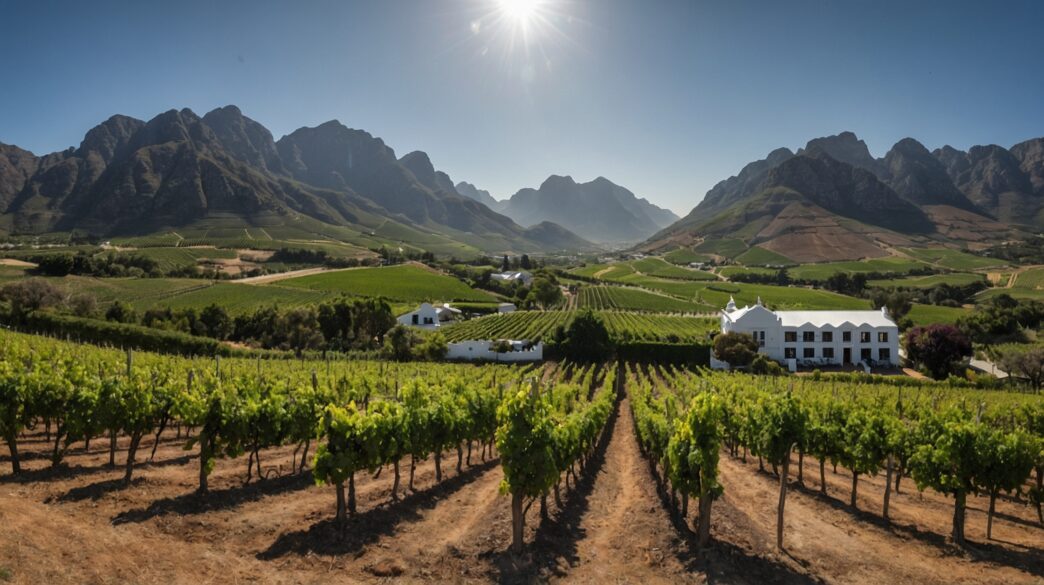
Franschhoek – Known for French Huguenot heritage, gourmet restaurants, and wine estates.
Overview
Location
Franschhoek is tucked away in the Western Cape’s celebrated Cape Winelands region, about 75 kilometres from Cape Town. Picture rolling vineyards, winding roads, and a horizon framed by dramatic mountains that seem to hug the valley. It’s the kind of scenery that feels almost cinematic—like you could be cast in a feature film just by standing there. By the way, if you’ve been checking out any local travel forums (for instance, The Western Cape Wanderer’s Quarterly), you’ll notice folks rave about how easy it is to get here. Hop in a car, follow the N1 out of Cape Town, and you’ll find yourself entering a world that’s part pastoral paradise, part sophisticated retreat.
The local climate is part of the magic: warm, dry summers and mild, occasionally wet winters. In fact, some friends of mine who grew up here claim they can smell the approach of the rainy season. When I visited last spring, I actually witnessed a sudden shower that blanketed the vineyards in a gentle mist. It felt like stepping into a living watercolour. That’s the sort of thing that sets Franschhoek apart; a picturesque environment with real personality, offering one-of-a-kind vistas at every turn.
History
I’m a sucker for history, and Franschhoek’s story really captured my imagination from the start. The name literally translates to “French Corner” in Afrikaans, a nod to the French Huguenot refugees who settled here in the late 17th century. Imagine escaping persecution in Europe and finding yourself in this remote, fertile corner of Africa. The settlers brought along their expertise in viticulture (winemaking, in plain English) and, according to The Heritage of the Huguenots Journal (2021), their influence on local agriculture can still be tasted in every glass of wine produced here.
This heritage isn’t just some distant footnote. It’s alive in the architecture (you’ll spot it in the elegant facades and French-inspired details), in the annual Bastille Festival (where you can see locals donning berets and stripes, sampling French cheeses, and sipping on crisp whites), and, of course, in the food scene. Foodies often say you can taste centuries of passion in each dish. I remember biting into a freshly baked baguette at a family-run bakery near the Huguenot Monument. It was so authentic, I could’ve sworn I was in a rustic boulangerie in Provence.
Population
Despite being an international draw, Franschhoek maintains a small population of around 17,000 residents. Sometimes, I’ll be wandering around town and bump into the same faces multiple times in a single day—people greet you like a neighbour, even if you’re just passing through. It’s an intimacy that you don’t always find in tourist hot spots. This place is as laid-back as it is sophisticated. That’s one reason visitors keep coming back. You can indulge in five-star dining one evening and then spend the next day at a casual village market, chatting with local farmers over a cup of artisanal coffee.
Unique Characteristics
We can’t discuss Franschhoek without paying homage to its mouthwatering reputation. Travel & Leisure often labels it “South Africa’s Culinary Epicentre.” With vineyards that date back hundreds of years, farm-to-table restaurants, and creative chefs blending local ingredients with French techniques, the dining scene here is second to none. But the best part? You don’t have to be a food connoisseur to appreciate it. I once met a backpacker couple from Poland who stumbled into one of the top-tier restaurants in hiking gear. The staff welcomed them with open arms, and the pair left raving about their epicurean experience. That’s Franschhoek in a nutshell: equal parts refinement and warmth.
Key Attractions
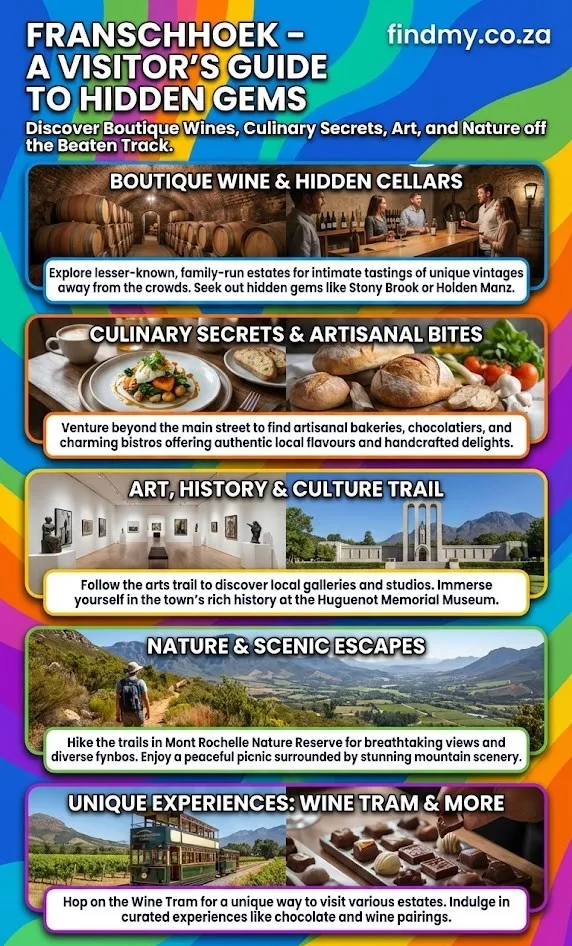
You’ve probably heard about the iconic wine tram. Indeed, the Franschhoek Wine Tram is beloved for its hop-on, hop-off journey along stunning vineyards. But let’s expand that view a bit. There’s also the La Motte estate, famous for both its art gallery and refined tasting room. A close second is Boschendal, one of the oldest farms in the country, offering picnics under ancient oak trees.
Foodies can’t resist the siren call of gourmet restaurants like Le Petite Colombe or Reuben’s, and culture buffs will love the Huguenot Memorial Museum for a deeper dive into the town’s origins. Feeling a different kind of horsepower? The Franschhoek Motor Museum has vintage cars spanning decades—picture a gleaming 1930s Bugatti framed by rolling vineyards. If you’re craving fresh air, Mont Rochelle Nature Reserve is your gateway to serene hiking trails with valley views that will take your breath away. Add in an annual celebration like the Bastille Festival—imagine a street fair brimming with wine, French-inspired eats, and all sorts of revelry—and you’ve pretty much covered Franschhoek’s main checklist.
Still, there’s so much more beneath the surface. Let’s venture off the beaten track, shall we?
Hidden Gems
1. Nature Spots
Mont Rochelle Nature Reserve’s Perdekop Trail
Most tourists hit the well-trodden paths at Mont Rochelle, but the Perdekop Trail remains a secret—until now. The route climbs steadily, leading you high above the valley. If you crave solitude and want to experience the raw beauty of the region’s fynbos (a type of native shrubland you’ll only find in South Africa’s Cape), Perdekop is the ticket.
La Motte Wine Estate Walking Trails
La Motte might be popular for wine tastings, but fewer people know about its scenic walking trails. These trails wind past vineyards, patches of indigenous flora, and quiet stream banks. It’s peaceful, too; you’ll rarely encounter a crowd. If you’re into birdwatching, bring binoculars. You might glimpse local species like the Cape robin-chat or the African dusky flycatcher flitting among the fynbos.
Wemmershoek Dam
If you’re looking for an almost meditative spot away from bustling cellar doors, Wemmershoek Dam is your sanctuary. It’s not a big tourist draw, which means you can often enjoy it all to yourself. On sunny afternoons, the water sparkles against the backdrop of rugged mountains. Fishing is allowed, though you’ll need a permit—pick one up at a local tackle shop.
Franschhoek River Walk
One of the most overlooked features of Franschhoek is its tranquil River Walk. This shady path runs along the town’s modest river, winding behind gardens and whispering willows. Locals use it as a quick getaway from the main streets; you’ll see joggers, dog walkers, and maybe a family feeding ducks. It’s a wonderful reminder that this town has layers; beyond the glam, there’s a very simple, very local pulse.
The Secret Garden at Franschhoek Wine Estate
Shh… this one is truly hush-hush. The Secret Garden lies behind a cluster of vines, almost hidden in plain sight. Pristine lawns, rose bushes in neat rows, a quiet koi pond—it was like the private garden you see in classic English novels, but with a South African twist. If you want solitude, this place is perfect for journaling, meditating, or just daydreaming among nature.
2. Cultural Experiences
Franschhoek Village Market
If you’re anything like me, you enjoy rummaging through quirky crafts and sampling local delicacies. The Franschhoek Village Market, happening every Saturday under old oak trees, is a feast for the senses. You’ll find artisanal cheeses, hand-stitched clothing, and maybe even a live band playing jazz tunes.
The Art in the Yard Gallery
Franschhoek has no shortage of galleries, but Art in the Yard stands out with its edgy vibe. Featuring emerging South African artists who experiment with bold colours and contemporary themes, this isn’t your typical landscape-and-wildlife-only gallery. It’s smaller and more intimate, so you can really soak up each piece. Once, they hosted a photo exhibition capturing township life in the Cape Flats. It was raw and powerful and a far cry from the more “touristy” art you might expect. If you’re keen on the local creative scene, don’t miss it.
Franschhoek Literary Festival
People rave about the wine, but not many realize Franschhoek is also a hub for literary minds. Every year, well-known authors and poets descend upon the town for panel discussions, readings, and workshops. Even if you’re not a hardcore bookworm, the casual events and friendly atmosphere make it a wonderful place to spark your curiosity about South African literature.
Ebony/Curated Art Gallery
Ebony/Curated merges local craftsmanship and high-end artistry. It’s like an elegant puzzle of African design, contemporary photography, and sculpture. The staff is welcoming—they’ll chat with you about the backstories of each piece, from tribal textiles to modern photographic prints.
Solms-Delta Music and Heritage Experience
Just outside Franschhoek lies Solms-Delta, where wine, music, and culture intertwine. They often host live performances featuring local genres like Ghoema (an energetic style with roots in Cape Town’s slave history). According to the Solms-Delta Cultural Trust Reports (2023), the estate invests in preserving local heritage by curating a small museum detailing the stories of early inhabitants, slaves, and settlers. It’s an immersive experience that goes far beyond mere wine tasting; it’s about understanding the soul of the land.
3. Historical Sites

Huguenot Memorial Gardens
While the Huguenot Monument commands attention, the adjacent Memorial Gardens remain somewhat of an afterthought for many tourists. The carefully manicured lawns, fragrant rose gardens, and reflective ponds offer a place to breathe and ponder. Sometimes, you’ll catch newlyweds posing for photos or a local family having a leisurely picnic. The atmosphere feels almost sacred, a living tribute to the resilience of the Huguenots and the blending of cultures.
Museum van de Caab at Solms-Delta
We touched on Solms-Delta already, but the Museum van de Caab deserves its own spotlight. This museum tells a moving story of the indigenous Khoi and San communities, enslaved peoples, and European settlers who shaped the region. Photographs, personal accounts, and artifacts come together to paint a complex narrative. If you love diving into real, unfiltered stories, this place will resonate.
La Motte Historic Cellar
Most folks visit La Motte for the wine, but did you know there’s an 18th-century historic cellar? Restored to preserve original architecture, it offers a glimpse into early Cape winemaking methods. Tours highlight antique presses and oak barrels. It’s a potent reminder that what we savour in our glasses has a pedigree stretching back centuries.
Dutch Reformed Church
In the heart of Franschhoek stands a Dutch Reformed Church that dates to the mid-1800s. It’s a simple white building, yet it carries an understated elegance. You might pass by it without noticing, which is a pity. Step inside, and you’ll find old wooden pews and stained-glass windows that softly diffuse the sunlight. It’s humbling to think how many generations have worshipped, celebrated, and mourned within these walls.
Boschendal Manor House
Close to Franschhoek, Boschendal is one of the oldest wine estates in the country, and its Cape Dutch Manor House is a marvel. Dating to 1812, the building showcases classic thatched roofs and white gables. On a guided tour, you’ll discover antique furniture and period décor that transport you to another era. There’s also a sense of layered history. Boschendal has witnessed colonial expansion, social upheavals, and agricultural evolution. Yet it stands graciously, reminding us of the region’s storied past.
4. Food & Drink
Le Bon Vivant
Tucked just off the main drag, Le Bon Vivant captures the essence of refined-yet-relaxed dining. The chef marries French techniques with South African produce in ways that feel both classic and inventive. The atmosphere is cozy; think candlelit tables, soft music, and staff who chat with you like you’re old friends. Don’t be surprised if you end up staying longer than planned.
Delicious Deli at Maison Estate
In the mood for casual bites? The Delicious Deli at Maison Estate is your go-to. Sit on their veranda and enjoy farm-fresh salads, hearty sandwiches, and baked pastries that smell like heaven. The deli’s emphasis on local, seasonal produce means the menu is always evolving.
Bovine
If you’ve had your fill of fancy gastronomy, Bovine is your safe haven for succulent burgers, ribs, and steaks. Located away from the busier parts of town, it’s the kind of place where locals converge. Sometimes you just crave comfort food, you know? And Bovine delivers, without any pomp.
Terbodore Coffee Roasters
Wine might be the star of Franschhoek, but coffee has its moment too, especially at Terbodore Coffee Roasters. This family-run roastery sources beans from across Africa, producing fragrant blends that’ll make you rethink that supermarket coffee back home. The vibe is laid-back, and if you’re lucky, you can snag a window seat.
The Tasting Room at Essence
For an offbeat wine-and-food pairing experience, The Tasting Room at Essence is the perfect hideaway. It feels a bit like walking into someone’s cozy living room; intimate and personal. Their rotating small-plates menu pairs brilliantly with hand-picked wines from smaller vineyards, many of which you won’t find on typical tasting itineraries. If you like to discover niche labels and chat with the staff about terroir and tasting notes, you’ll love this spot.
FindMy Food Recommendations:
5. Unique Activities
Artisan Cheese Making Workshop
Few things pair with wine as nicely as cheese, right? Why not learn how to make your own? Local artisans host cheese-making workshops that walk you through the entire process—from pasteurizing milk to cutting curds and aging cheese. It’s hands-on and, trust me, a little messy. But the thrill of tasting your homemade chèvre or ricotta is unbeatable.
Franschhoek Wine Tram Tour (Personalized Edition)
You’ve heard of the tram, yes, but did you know they offer personalized tours? These curated experiences include a guide who’ll focus on your specific interests—whether it’s bubbly, reds, or historical anecdotes.
Fleur du Cap Fynbos Experience
Ever wondered about the unique plants that only grow in the Cape region? The Fleur du Cap Fynbos Experience offers a guided hike through lesser-known trails, shedding light on the medicinal and culinary uses of native flora. An herbalist once demonstrated how to make a soothing tea from the rooibos plant right on the spot, which was a memorable moment. If you’re the type who loves forging a connection with the land, you won’t want to pass this up.
Bespoke Wine Blending Experience
For the ultimate souvenir, how about creating your own wine blend? Several boutique estates let you experiment with varietals—shiraz, cabernet, merlot, and so on. Guided by a vintner, you’ll learn how different grapes contribute to body, colour, and aroma. Then comes the fun part: tasting and blending until you strike the perfect balance. You bottle it, label it, and—voilà!—you’ve got a personalized bottle of Franschhoek to take home.
Pottery Classes at Franschhoek Pottery
If you want a break from all the wine talk, try your hand at pottery. Franschhoek Pottery offers classes for all skill levels, from pinch pots to wheel throwing. There’s something calming about working with clay, shaping something from a lump into a functional piece of art.
Local Tips
1. Places to Stay
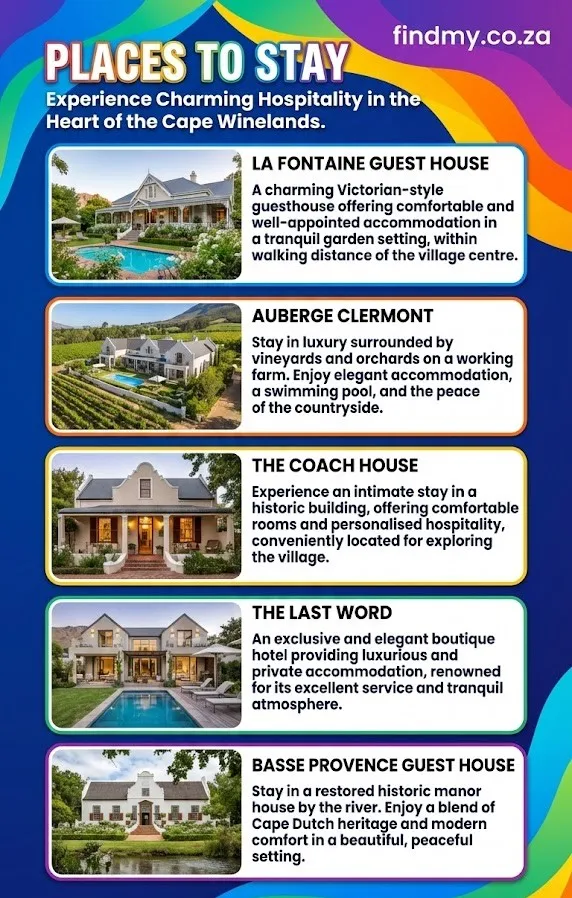
La Fontaine Guest House
Close to the main hustle but nestled in a peaceful garden, La Fontaine Guest House is like slipping into a quiet dream. Each room feels individually curated, and the homemade breakfast is a highlight.
Auberge Clermont
Set on a working vineyard, Auberge Clermont is your chance to experience rural charm with modern comforts. The property faces the valley, so mornings are breathtaking, with golden light draping over the vines. The on-site restaurant whips up farm-fresh meals.
The Coach House
Looking for something with old-world elegance? The Coach House is perched on a picturesque estate, surrounded by lush gardens. There’s a timelessness to the rooms (antique furnishings, tasteful decor) that makes you feel like you’ve journeyed back a century, but with modern comforts at your fingertips.
The Last Word Franschhoek
For a dash of luxury, The Last Word has stylish suites where you can unwind in privacy. Each suite exudes sophistication, with plush bedding and a terrace overlooking manicured grounds. The staff hosts a complimentary wine-and-cheese event, perfect for warming up after a day out.
Basse Provence Guest House
History buffs will love Basse Provence, a guesthouse situated in a heritage building from the 1800s. Each room is adorned with local art, giving it a cozy, personal touch. My favourite memory here: an early morning walk through the gardens, dew glistening on rose petals, with the faint aroma of coffee drifting from the kitchen. It’s these small sensory details that imprint themselves on your heart.
2. How to Get Around
Wine Tram
Yes, the Franschhoek Wine Tram is touristy, but in the best possible way. It’s scenic, convenient, and the perfect designated driver if you’re planning to do multiple tastings. I love how each route features unique estates, and the staff weaves in titbits about local history. Try the quieter lines if you want fewer crowds—like the Purple Line, which stops at lesser-visited estates.
Local Shuttle Services
For group trips or if you’re just not keen on driving, local companies like Franschhoek Shuttles are a godsend. They’ll whisk you to vineyards, restaurants, or even neighbouring towns like Paarl or Stellenbosch. No parking hassles, no stress—just pure enjoyment.
Bicycle Rentals
One of the most freeing ways to see Franschhoek is on two wheels. Shops such as Bike & Wine rent out bicycles and even offer guided routes. There’s nothing like pedalling through vineyards, feeling the breeze, and stopping whenever you please.
Walking Tours
Franschhoek is compact, so a walking tour is a delightful option. Local guides will not only point out historical landmarks but also share anecdotal stories like which estate used to be a secret meeting spot for revolutionaries or which oak tree is rumoured to be haunted. By the end, you might just feel like a temporary resident, in the best sense of the word.
Car Hire
If you’re eager to explore beyond the valley—maybe visit the Overberg region or the scenic coastal towns—then car hire is a no-brainer. Take the R45 or R310 and discover hidden roadside farm stalls selling freshly baked bread, or pop into smaller wineries that aren’t on the tram route. Having the freedom to roam at your own pace can open up an entire world of unexpected sights.
3. Best Time to Visit
- Spring (September to November): Mild temps, blooming vineyards, fewer crowds—it’s picturesque and lively. You can practically watch the valley awaken from winter’s sleep. If you’re a nature lover, spring is the sweet spot for day hikes followed by crisp rosé tastings.
- Autumn (March to May): This is grape harvest season, so expect vineyards alive with activity. The foliage turns gold and rust, painting a warm backdrop for your photos. Nights can be cool, but a snug cardigan is all you need to enjoy a starlit dinner under the oaks.
- Summer (December to February): Expect hot days—temperatures can climb past 30°C (86°F). Ideal if you love sunbathing by the pool or want to attend vibrant festivals. But be prepared for bigger crowds and slightly higher accommodation rates.
- Winter (June to August): Often overlooked, but so cozy! Crisp mornings, fireplaces blazing at restaurants, and off-peak deals. If you’re not afraid of a little rain or a chill in the air, you’ll find the town quieter, more introspective. Some of my best red wine tastings happened in the middle of winter storms, with thunder rumbling outside—truly atmospheric.
Adventure Seekers
1. Road Trips & Routes
Paarl
An easy ride via the R45, with stops at La Motte and the Afrikaans Language Monument. I still chuckle remembering the time I attempted to pronounce certain Afrikaans words incorrectly, earning good-natured laughs from locals. Paarl also has a mountain reserve that offers sweeping views of the valley.
Stellenbosch
Take the R310, and consider a pit stop at Vredenheim Estate, which features a wildlife park. Stellenbosch is known for its historic oak-lined streets. I recommend exploring the Stellenbosch Village Museum, where each curated house represents a different time period in the town’s history. It’s like stepping back in time.
Somerset West
The scenic R44 leads you to Somerset West, home to the Helderberg Nature Reserve—perfect for hiking. On my last visit, I found a trail that overlooked False Bay, and the sight of ocean meeting mountains was pure poetry. Also, Vergelegen Wine Estate is famed for its gardens and historical buildings.
Ceres
If you fancy a longer trek, head through the Robertson Valley to reach Ceres. Known for its fruit farms, Ceres is especially enchanting in spring when blossoms add a romantic hue to the landscape. If you’re up for it, try a local fruit wine—an unexpected twist on the usual grape-based varieties.
Overberg Region
Drive south on the R45 to discover charming spots like Greyton and Caledon. Greyton is known for its artisan shops and weekly market, while Caledon is all about natural hot springs. One winter, I indulged in a hot-spring soak amid chilly air, and it was heavenly. Local stalls also sell homemade pies—don’t skip those!
2. Nature & Wildlife Escapes

Mont Rochelle Nature Reserve
Perfect for hikers of all levels. If you’re quiet, you might spot baboons or small antelope in the distance.
Kogelberg Biosphere Reserve
A UNESCO World Heritage Site just a short drive away. Known for its astounding plant diversity, it’s a botanist’s paradise.
Fynbos Eco Lodge
For an overnight retreat, consider staying at this eco-friendly lodge on a working farm. The staff organizes nature walks focusing on local flora. Watching the sunrise over the vine-covered hills feels like a meditation session in itself.
Theewaterskloof Nature Reserve
Surrounding the Theewaterskloof Dam, it’s a quiet spot for fishing, birdwatching, or simply unwinding.
Kleinplaas Nature Reserve
Small but mighty, with trails that wander through indigenous vegetation. You might catch glimpses of small buck. The hush here is almost tangible—just the rustle of leaves and the occasional chirp of crickets.
Eagle Encounters at Spier Wine Estate
A quick drive away, this bird-of-prey rehabilitation center is an unexpected highlight. Witnessing a falcon soar off my gloved hand was equal parts thrilling and humbling.
3. Adventure Activities
Rock Climbing at Mont Rochelle
Certain crags cater to various skill levels. Climb with a guide if you’re new; safety first! I met a local climber who compared scaling these rock faces to “dancing with the mountain.” Poetic, right?
Ziplining at Hottentots Holland Nature Reserve
Fly through treetop canopies while soaking in panoramic vistas. My heart pounded with excitement (and maybe a bit of fear) on my first run, but the exhilaration was worth every second.
Mountain Biking in Franschhoek Valley
Trails crisscross vineyards and farmland. If you’re up for a challenge, tackle the Franschhoek Pass—steep climbs, hairpin turns, and epic viewpoints. Just don’t forget your water; it’s easy to get dehydrated under the African sun.
Off-Grid Camping at Doolhof Wine Estate
Located in a secluded part of the valley, you’ll have starlit skies, the soft hum of nature, and a chance to unplug from the world. And yes, you can still sip great wine by the campfire—best of both worlds.
Horse Riding Adventures
Ride through vineyards and along mountain trails. Even if you’re a beginner, the gentle horses and friendly guides will make you feel at ease. There’s something about seeing the valley from horseback that feels delightfully pastoral and a little grand.
Canoeing on the Berg River
Calm waters, scenic banks—ideal for a relaxing paddle. It’s family-friendly, and you might spot colorful birdlife along the riverbanks. Bring a waterproof camera if you have one; you’ll want to capture those tranquil views.
4. Cultural & Heritage Tours
Huguenot Memorial Museum
Want a deep dive into Huguenot history? This museum has rich archives and evocative exhibits.
The Franschhoek Village Market
We’ve touched on it before, but it doubles as a cultural event. Each artisan stall has a story—maybe it’s the baker whose family recipe dates back generations or the ceramicist who draws inspiration from African motifs.
Art and Craft Tour at The Gallery at Grande Provence
Pair your wine tasting with an artistic feast. You can wander through a contemporary art exhibition, then head outside to marvel at the estate’s sculpture garden. The synergy between nature and art here is mesmerizing.
The Franschhoek Art Route
A self-guided tour that highlights smaller galleries and public art pieces. Pick up a route map from the tourism office. One of my favorite stops was a mural celebrating the region’s diversity—vivid colors capturing the spirit of Franschhoek’s melting pot heritage.
Heritage Walks
Local guides, often historians or longtime residents, will lead you through lesser-seen parts of town. They’ll share tidbits like how the original marketplace was once a gathering spot for horse traders. You’ll end up feeling like you’ve gone backstage in Franschhoek’s historical theatre.
Culinary Heritage Tour
Because food is culture, right? These tours introduce you to local farms, family-run eateries, and a variety of Cape Malay, French, and African-inspired dishes. Imagine sampling koeksisters (syrupy doughnuts) in the morning, then stepping into a French patisserie for lunch.
5. Culinary Trails
Farm-to-Table at Boschendal
Known for its fresh produce, Boschendal hosts regular seasonal feasts. Long communal tables, baskets of just-picked veggies, hearty meats, and robust wines. Feels like a family gathering, even if you’re among strangers.
Franschhoek Food & Wine Route (Hidden Stops)
Sure, you know the big estates but be adventurous. Explore smaller cellars—like Rustenberg—where the winemaker might greet you personally. With fewer visitors, the tastings feel more like a chat among friends.
Culinary Tours with Franschhoek Kitchen
Perfect for those who want an educational spin on their indulgences. You might visit an artisanal goat farm, then see how that same cheese is paired at a top restaurant. Learning how local terroir influences each bite can be eye-opening.
Hidden Gem Restaurants
If you can track down The Olive Shed, you’re in for a Mediterranean-South African fusion treat. Think fresh olives, homemade pasta, and local wine in a minimalist setting. Another best-kept secret is The Kitchen at Maison, with a constantly evolving menu shaped by what’s in season.
Local Farmers’ Markets
Beyond Franschhoek’s main market, keep your eyes peeled for smaller ones in the neighbouring towns. Caledon, for instance, hosts a modest but lively market on certain weekends. The carrot cake I tasted there—topped with a tangy cream cheese frosting—still haunts my dessert dreams.
Wine & Food Pairing Experiences
Some estates, like Anthonij Rupert Wyne, offer curated pairings that go beyond the usual cheese and charcuterie. They offer a flight of red blends matched with mini dishes that highlight each wine’s flavour notes—like a spiced lamb kebab to bring out the smoky undertones of a shiraz. It’s a culinary dance that leaves you craving more.
6. Wedding Venues

La Petite Dauphine
You glide down an oak‑tunnelled drive, and the farm suddenly feels like a sepia postcard come alive. Last April, my cousin’s micro‑wedding here dodged load‑shedding when hadedas shrieked right as the lights blinked, comedy beating chaos. According to the Winelands Small Weddings Survey 2025, bookings soared 18 percent after the estate laced its dam with solar fairy‑lights—tiny sparks that seem to applaud every “I do.”
Grande Provence
Step through the iron gate and the sculpture garden greets you like a living album cover. I watched a groom sabre Méthode Cap Classique so clean the cork landed in a bronze kudu’s antlers—talk about accidental décor. The curator swaps artworks monthly, so your backdrop might be street‑art neon or delicate wire birds, wedding album sorted. Eskom wobble? The estate flipped its solar switch in January; generators are now merely plan C.
Haute Cabrière
Head underground into the candle‑lit cellar carved into the mountain, and you’ll feel like you’ve stumbled into Tolkien’s wine lounge. During a rehearsal last week, a groom practised sabrage five times; each pop echoed like thunder and calmed his knees. Local paper Franschhoek Tatler reports the venue’s new hydrogen generator kept festivities glowing through February’s blackout. Picture ending the night on the terrace, valley lights flickering below like fallen stars you can almost pocket.
More popular wedding venues in Franschhoek
Franschhoek might be small, but it’s the kind of small place that holds a universe of experiences. From its age-old Huguenot heritage to its modern-day reputation as a culinary and wine powerhouse, it balances tradition and innovation like few places can. Whether you’re sipping an award-winning Cabernet while gazing at mountains bathed in a sunset glow, or you’re wandering a hidden trail where every fern feels like it’s been planted just for you—this valley makes an indelible mark on your soul.
So here’s my parting thought: Don’t just tick off the main attractions. Dive deeper. Meet the people, stroll the lesser-known paths, peek into the cozy art galleries, and sign up for that pottery class or cheese workshop you’ve been eyeing. Embrace the fact that Franschhoek is both refined and rustic, steeped in history yet brimming with contemporary energy. Let curiosity be your guide, and I promise—you’ll find your own secret corners and memorable moments in this special corner of the world.
Safe travels and happy exploring. À bientôt, my friend… Until we meet again in Franschhoek’s sun-kissed vineyards!


