


Overview
- The fascinating historical origins tracing back to ancient open flames.
- Choosing indigenous hardwood over commercial alternatives for the perfect glowing embers.
- Navigating the strict social etiquette surrounding the master of the fire.
- Exploring the diverse meats and unique regional side dishes that complete the menu.
- Reflecting on past electrical grid issues and the looming threat of their sudden return.
There’s a quiet magic in gathering around a crackling outdoor fire. In South Africa this specific ritual goes by one universal name. It’s simply called a braai. This event is far more than just a mundane way of cooking food outdoors. It’s an enduring cultural institution that seamlessly bridges deep social divides. It builds strong communities across incredibly varied and beautiful landscapes. The mesmerising dance of the bright orange flames draws people together perfectly. It works exactly just as it did many centuries ago. Understanding the absolute essentials of this beloved tradition reveals a genuinely fascinating story. It shows a wonderful blend of ancient history mixed with pure culinary brilliance.
The Ancient Roots of Cooking Over Open Fire
The term itself actually stems from the old Dutch word for roasting meat. However, the core practice significantly predates any European arrival by millennia. Archaeological sites located in the Cradle of Humankind provide incredible evidence. Dedicated researchers discovered clear remnants of controlled cooking fires used over a million years ago. They found burned animal bones hidden deep inside the dark Swartkrans caves. This remarkable fact naturally invites genuine wonder from historians. One can’t help but imagine the countless stories shared over those ancient embers. Today the modern iteration beautifully merges deep indigenous cooking techniques with newer settler traditions.
On the twenty fourth of September each year the entire country celebrates Heritage Day. It’s informally known absolutely everywhere as National Braai Day. This brilliant national shift was actively championed to unite millions around a shared experience. It’s profoundly moving to envision countless fires burning simultaneously across the vast land. The rising smoke creates an invisible cultural network connecting everyone. It ties bustling coastal cities directly with quiet inland towns under vast turquoise skies. The simple act of lighting wood becomes a powerful symbol of national unity.
Selecting Hardwoods Over Commercial Charcoal
An authentic experience absolutely requires proper natural wood. Commercial briquettes and gas grills simply lack the deep soul needed for the task. True enthusiasts actively source incredibly dense indigenous hardwoods for their outdoor fires. Botanists frequently highlight specific ancient trees like Rooikrans or Kameeldoring for their unique properties. These remarkable protected species possess an unusually high carbon density inside their trunks. They also contain very low natural moisture levels compared to regular wood. Therefore, they burn very slowly and produce a thick bed of glowing coals.
Creating these perfect hot embers is a sacred ritual all on its own. You simply don’t just light a quick fire and start cooking your meat immediately. The rough wood must gradually burn down over an extended period. This deliberately tests the patience of every hungry guest waiting nearby. Yet this long waiting period is actually the most crucial part of the evening. It provides vital unbroken time for natural conversation to flow completely freely. The distinct rich fragrance of burning Rooikrans is completely unforgettable to anyone present.
The Unspoken Etiquette of the Grill
Stepping up to another person’s fire uninvited is a massive breach of protocol. The generous host is respectfully and universally addressed as the braaimaster. This deeply focused individual maintains complete authority over the searing iron grid. Offering unsolicited advice about turning the lamb chops will certainly earn a sharp look. It displays a fascinating primal territorial instinct beautifully wrapped in warm hospitality. The braaimaster fiercely guards their favourite pair of heavy metal tongs. Guests must simply observe the cooking process from a highly respectful distance.
Attendees usually bring their own cold beverages and raw ingredients to contribute. This highly practical social system is locally termed a bring and braai. The host gladly provides the roaring fire and the comfortable backyard venue. They also spend hours preparing the necessary fresh side dishes for everyone. This intelligent arrangement wonderfully eases the heavy financial burden of entertaining large groups. Nobody bears the entire monetary cost of the joyous gathering alone. Everyone leaves the beautiful venue completely full and thoroughly satisfied with the night.
The Main Event on the Iron Grid
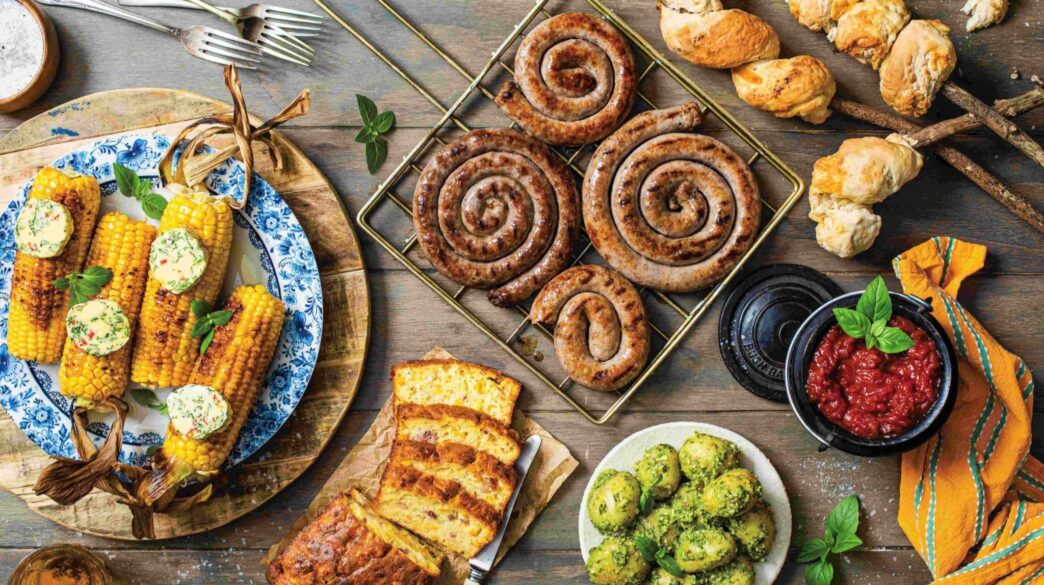
The undisputed star of the weekend gathering is always the thick boerewors. This is a traditional coiled sausage seasoned heavily with roasted coriander seed and nutmeg. Dedicated food historians note that authentic boerewors must legally contain at least ninety percent meat. The coriander seed must always be toasted whole before grinding for the best flavour. The beautiful aroma of crushed spices hitting the hot metal is instantly recognisable. It reliably triggers a deep sense of comforting nostalgia for anyone raised nearby.
Alongside this iconic spiced sausage, you will typically find thick cut lamb chops. You might also easily spot chicken sosaties gently sizzling away over the intense heat. Sosaties are delicious meat skewers deeply marinated in a sweet and sour curry sauce. This specific apricot marinade traces its rich origins back to the Cape Malay community centuries ago. It perfectly illustrates how completely different cultural threads beautifully interweave on a single grid. The diverse flavours perfectly represent the complex history of the entire nation.
Beyond the Sizzling Meats
A truly proper dinner plate is never quite complete without the traditional side dishes. The most beloved of these carbohydrate additions is the famous braaibroodjie. It’s a simple toasted sandwich filled with sharp cheddar cheese and sweet fruit chutney. The cheese must be perfectly melted right to the very crispy edges. These sandwiches are purposefully placed on the grid last when the heat drops. They sit quietly on the cooler edges soaking up the lingering smoky flavours.
Pap and chakalaka form another absolutely essential and delicious culinary pairing. Pap is a stiff white maize porridge acting as the perfect vessel for rich meat juices. Chakalaka is a highly spicy tomato and bean relish that adds a vital fiery kick. Culinary researchers often highlight chakalaka as a brilliant indigenous urban invention. It was famously born in the bustling dusty mining townships of Johannesburg many decades ago. The combination creates a perfectly balanced and entirely satisfying flavour profile.
The Unseen Science of the Sear
Cooking perfectly over wood coals demands an intuitive grasp of basic thermodynamics. The intense heat is almost never entirely uniform across the entire flat steel surface. The braaimaster must continuously read the changing temperature using a bare hand. Holding a hand directly over the hot coals measures the radiating heat perfectly. If one can only hold it there for three painful seconds, it’s finally time for steak. It’s an ancient primal thermometer that simply never fails the experienced cook.
Rich fat rendering from the cooking meat constantly drips down onto the blistering coals. This liquid vaporises instantly and sends flavour packed smoke billowing right back up. Food chemists identify this complex process as the Maillard reaction in its most wild form. It’s this exact volatile chemical reaction that makes the authentic flavour impossible to replicate indoors. You simply cannot fake that distinct smoky essence in any modern electrical kitchen. Resting the meat afterwards is just as important as the actual fiery cooking phase.
Overcoming the Threat of Electrical Grid Issues
In recent years this ancient cooking method surprisingly gained a strange new relevance. South Africa used to have terrible scheduled national power outages locally known as load shedding. During those difficult dark times backyard fires were frequently lit out of pure daily necessity. It was deeply concerning to watch vital modern infrastructure struggle so much on a national level. Yet it was undeniably beautiful to witness the incredible community resilience that quickly emerged. The sudden deafening silence of failing generators was quickly replaced by lively neighbourhood chatter.
Thankfully the national electricity grid has stabilised recently, and the daily rolling outages have stopped. However leading energy experts continuously warn that severe grid issues might suddenly come back. This lingering nervous uncertainty keeps the outdoor fire tradition highly relevant and deeply practical. People still clearly remember entire suburban neighbourhoods going completely dark right at dinner time. The comforting familiar smell of woodsmoke served as a powerful daily reminder of endurance. It proved that communities could quickly adapt to incredibly frustrating modern challenges.
Exploring Regional Variations in Hospitality
Every single province naturally adds its own totally unique spin to the weekend menu. Down by the breezy coastal regions fresh line fish often replaces the heavier red meats. Whole fish wrapped carefully in foil cooks beautifully over the gentle dying embers. Exploring the hospitality directory of small local towns reveals countless fascinating regional preferences. Some quiet inland farming towns strictly prefer wild venison hunted from the surrounding dusty plains. The famous Karoo lamb feeds on wild herbaceous bushes giving it a spectacular natural flavour.
The specific table accompaniments also change drastically depending on exactly where you choose to visit. Coastal hosts might generously offer a fresh snoek pate alongside warm sweet potato. Inland hosts will usually lean heavily towards rich creamy potato bakes and traditional bean salads. This immense geographical variety ensures that no two evening gatherings are ever exactly the same. It turns a seemingly simple evening meal into an exciting culinary journey across the nation. Every fire tells a completely different local story.
Conclusion
Ultimately a proper authentic braai effortlessly transcends the simple act of preparing a daily meal. It’s a deeply ingrained social ceremony demanding immense patience and genuine mutual respect. The loud crackling fire completely strips away endless modern digital distractions, leaving only incredibly good food and genuinely honest conversation behind. South Africa faced incredibly dark times with fragile electricity, and they might face them again soon. Yet the steadfast warm flames continuously forge vital human bonds across a wonderfully diverse landscape. Gathering closely around those glowing orange coals remains an absolute essential experience for truly understanding this resilient nation.


